WhatsApp Image 2026-01-21 at 20.14.22 (1)

KAILO Session 5

KAILO Session 5 – Identifying Change Areas

During Session 5 of the KAILO programme, young people came together to take an important step forward in shaping the issues they believe need real change within their community.

Building on the discussions from previous sessions, the group reviewed the different “system icebergs” they had created. These helped them explore not just the visible problems affecting young people’s wellbeing, but also the deeper patterns, structures, and beliefs that sit underneath them. Working in small groups, participants carefully discussed and prioritised the issues they felt had the greatest impact on young people’s mental health and wellbeing.

Using a simple but powerful voting activity, young people placed stars on the issues they believed mattered most. This sparked thoughtful conversations as they debated where meaningful change could happen and what problems should be tackled first.

The session then moved into identifying “pressure points” – areas where small changes could potentially create a much bigger positive impact. Young people explored different aspects of the system, including repeated events, patterns of behaviour, rules and structures, and the beliefs that influence how young people are treated or supported.

One of the most encouraging aspects of the session was seeing how the group worked collaboratively and respectfully, listening to each other’s experiences and perspectives. As the discussion progressed, it became clear that the young people were coming together with a shared sense of purpose, recognising that many of their experiences were connected and that their voices could help influence change.

By the end of the session, the group had successfully shortlisted several potential change areas that they believe could make a real difference. They also developed a series of important questions to help them explore these issues further and decide which area should become their main focus moving forward.

The session ended with a reflective discussion about what information they still need, what adults and services might know that young people don’t, and how young people themselves can play a leading role in shaping solutions.

As the programme continues, these insights will help guide the next stage of the work, where the group will share their thinking with a wider audience and continue developing ideas that could lead to real improvements for young people in Havering.

Screenshot

EVVU Funding Limes Farm

Youth Unity Secures Funding for Limes Farm Youth Hub & Holiday Outreach

We are proud to announce that Youth Unity has secured new funding to deliver dedicated youth club sessions at Limes Farm, alongside an expanded programme of holiday outreach through our Mobile Media Van.

This investment strengthens our commitment to prevention, early intervention, and community-based youth support.

A Consistent Friday Youth Hub

Across the Spring and Summer terms, we will deliver term-time Friday youth club sessions, aligned with the school calendar. By excluding school holidays and bank holidays, the programme provides sustained, reliable engagement when young people need it most.

The Limes Farm Youth Hub will offer:

  • A safe, structured space after school
  • Sports, games and creative activities
  • Confidence and resilience building sessions
  • Positive peer interaction
  • Trusted adults who young people can talk to

For many young people, the hours between school finishing and parents returning home are critical. This provision ensures those “lost hours” are replaced with opportunity, structure and support.

Targeted Holiday Outreach: Taking Support Into the Community

In addition to term-time sessions, funding has been secured for:

  • 6 weeks during the Summer holidays
  • 2 weeks during the Easter holidays
  • 2 weeks during the June half-term

Through our Mobile Media Van, we will meet young people where they already are — on estates, in communal spaces and in local hotspots. This flexible approach removes barriers to participation and extends our reach to those who may not walk through the doors of a traditional youth setting.

Why This Matters

This programme is not just about activities. It is about:

  • Increasing protective factors
  • Reducing vulnerability to exploitation and anti-social behaviour
  • Strengthening connections with trusted adults
  • Building confidence, resilience and positive identity
  • Supporting safer community environments

By combining a fixed Youth Hub with mobile outreach, we create a dual-layered prevention model: consistency through weekly sessions, and responsiveness through holiday outreach.

We are looking forward to working alongside families, partners and the wider community to make this programme impactful, visible and accessible.

WhatsApp Image 2026-02-19 at 15.22.55

Rethreaded Session 1.

This week we welcomed the first group of young people to our Rethreaded Sustainable Fashion Project and what a brilliant start it was.

Although we had a smaller group than expected due to the school break and other commitments, the session felt focused, creative and full of potential. Sometimes smaller groups allow for deeper conversations and stronger connections and that was certainly the case.

The girls spent time getting to know each other, sharing ideas and beginning to sketch their own design concepts. From bold statement pieces to creative re-imagining of everyday clothing, it was inspiring to see their individuality already shining through. There was real excitement in the room as ideas started turning into rough designs on paper.

Rethreaded is about much more than fashion. As outlined in our session plan

Rethreaded Lession 1 the project is designed to build:

  • Confidence
  • Self-expression
  • Creativity
  • Peer connection
  • A sense of belonging

This first session focused on creating a safe, welcoming space where every idea mattered. The young people explored what fashion means to them, how creativity connects to identity, and what they hope to gain from the project over the coming weeks.

Next week we’ll begin developing these initial sketches further and exploring sustainable materials and upcycling. The energy is building already and we’re excited to welcome the full group back together.

This is just the beginning of something special.

Trauma-Informed-Practice.jpg

Active Essex – Bystander Funding

At Youth Unity, our work with young people continues to grow, and alongside this growth comes the need to strengthen the systems that support our team behind the scenes. Thanks to funding support from Active Essex, and development guidance through Sporting People, we have been able to invest in building organisational infrastructure that improves how we work, collaborate and deliver high-quality support to young people across our programmes.

We were contracted to support the development and growth of our organisation by focusing on key areas identified within our Action Plan. With guidance from Sporting People, we explored how strong internal systems can improve workforce development, governance and long-term sustainability.

Areas of Focus

Through guidance from Sporting People, we focused on strengthening four key areas that support organisational growth and sustainability:

Employee Journey
Developing clearer pathways for staff and volunteers from onboarding through to development and progression, ensuring our team feels supported, confident and connected throughout their journey with Youth Unity.

Employee Experience
Improving communication, access to resources and internal collaboration to support staff wellbeing, engagement and consistency across delivery.

Learning & Development
Embedding structured training, shared learning resources and digital tools that support workforce development, leadership growth and ongoing skills development.

Governance
Strengthening organisational systems, processes and oversight to improve compliance, accountability and sustainable delivery.

Turning Strategy into Action

To bring these priorities to life, our Action Plan focused on building practical infrastructure that supports everyday delivery:

  • Developing Microsoft SharePoint as a centralised intranet platform for resource storage, collaboration and organisational knowledge.
  • Enhancing Microsoft Teams with structured channels to replace informal communication methods, improving clarity and information tracking.
  • Providing digital upskilling to increase staff confidence and efficiency when using Microsoft tools.
  • Hosting a “Team Reset Day” to deliver hands-on training, align workflows and update devices.
  • Hiring a SharePoint specialist to support expert implementation and training.

Organisational Impact Snapshot

Since implementing the new infrastructure, we have already seen significant organisational improvements:

  • Improved staff collaboration and communication through structured digital systems.
  • Faster access to safeguarding policies, training materials and programme resources.
  • Stronger governance through integrated project tracking and timesheet management.
  • Reduced administrative duplication, enabling more time spent on direct youth support.
  • Increased organisational readiness to scale delivery while maintaining consistency and quality.

What This Means for Our Work with Young People

While much of this work happens behind the scenes, the impact is directly felt in our delivery. The new integrated system now brings together project management, timesheets, policies, training resources and programme information into one accessible environment. This has strengthened communication across our team, improved governance and reporting, and enabled us to manage funding and projects more effectively.

Most importantly, it allows our mentors and staff to spend less time searching for information and more time focusing on what matters most  building relationships, creating safe spaces and supporting young people to thrive.

We are incredibly grateful to Active Essex for investing in our organisational growth and to Sporting People for their guidance throughout this process. This infrastructure has not only improved how we work today but has created strong foundations that will support Youth Unity’s sustainability, scalability and long-term impact.


a lonely child sitting on a bench, feeling isolated while others walk away

Serious Violence Strategic Partnership

We are proud to share that Youth Unity has joined the Serious Violence Strategic Partnership, a key subgroup of the Havering Community Safety Partnership, bringing together local agencies, services, and partners to develop a coordinated response to reducing serious violence across the borough.

This partnership plays a vital role in addressing the root causes and impact of serious violence, ensuring that the needs of those affected are recognised and supported through strategic collaboration and shared action. As part of this work, the group focuses on responding to priorities identified within the Serious Violence Strategic Needs Assessment, developing targeted initiatives to reduce incidents, and overseeing the delivery of the Violence and Vulnerability Action Plan (VVAP).

Youth Unity’s involvement reflects our ongoing commitment to contextual safeguarding and early intervention. Through our direct work with young people across Havering including mentoring, outreach, enrichment programmes and youth voice initiatives — we bring frontline insight into the challenges young people face and the solutions that can create lasting change.

By contributing to strategic discussions, sharing best practice, and strengthening inter-agency collaboration, we aim to help shape a coordinated approach that not only responds to risk but also creates positive opportunities, safe spaces, and supportive pathways for young people.

We look forward to working alongside partners across the borough to support the delivery of the Serious Violence Strategy and ensure that young people’s voices, experiences, and needs remain central to the work.

20251010_113604

Mentoring to the Open Sea

From Mentoring to the Open Sea — Child A’s Journey

Not every young person finds their confidence in a classroom. Sometimes it is found on the open water, with the wind in the sails and a team depending on you.

Child A came to Youth Unity through the MyEnds Havering programme delivered at Koru-ED. Like many young people we support, they carried strengths and aspirations that simply needed the right environment to be recognised. During mentoring conversations, Child A spoke about sailing, memories of time spent with their grandfather and a long-held dream of working with their hands, being active, and one day building a future connected to the sea.

When a fully funded Tall Ships Youth Trust sailing voyage became available, we recognised the potential for something more than just an experience, it could be a turning point.

From the moment Child A stepped aboard, something shifted. The structure, teamwork and hands-on nature of sailing created a space where they could thrive. Learning to run sails, understanding deck routines, supporting engine work and contributing to daily life onboard allowed Child A to discover confidence through action and responsibility. What stood out most was not only their enthusiasm to learn, but their instinct to support others, demonstrating kindness, maturity and leadership in a challenging new environment.

The Tall Ships team reflected that Child A “absolutely flourished,” quickly becoming a valued member of the crew. They showed initiative, supported activities, learned quickly, and most importantly looked out for others with genuine care and maturity. The impact was so significant that the team recommended Child A begin a volunteering journey with Tall Ships Youth Trust and invited them back for a Pre-Christmas Youth Adventure Weekend as part of their ongoing development. Skipper Sophie, who worked closely with Child A, even created a reflection document highlighting why continued opportunities would be such a valuable next step.

For Child A, sailing offered something powerful, a place where their ADHD became a strength rather than a barrier. They described how being active, using their hands and working as part of a team helped them feel focused and capable in ways they had not always experienced within traditional learning environments. Running the sails, learning new skills and even teaching others onboard gave them a sense of purpose and pride. What began as curiosity quickly grew into aspiration, with Child A sharing their dream of one day becoming a captain, travelling, working at sea and helping others feel safe and confident on boats.

The experience also highlighted the importance of accessible opportunities. Child A spoke openly about how financial support made participation possible, and how being given that chance showed them that others believed in their potential.

Today, as Child A prepares for their GCSEs, their journey continues to grow. Youth Unity has been invited to bring a new cohort of young people onto the sailing programme, and Child A has been asked to return not just as a participant, but as a volunteer skipper, supporting others as they begin their own journeys.

Before the next voyage, Youth Unity will be supporting Child A through further training and preparation to help build confidence, leadership skills and readiness for this new role. This next stage represents more than progression; it reflects trust, growth and the transformation that can happen when young people are given meaningful opportunities aligned with their passions.

And who knows where this journey might lead? What began as a mentoring conversation has already opened doors that once felt out of reach. Perhaps this is just the beginning of a future connected to the maritime world, proof that when young people are truly listened to and supported, new pathways become visible.

At Youth Unity, stories like this remind us that mentoring is not about changing who young people are, it is about helping them discover who they already have the potential to become.


E1356_1

Swanley

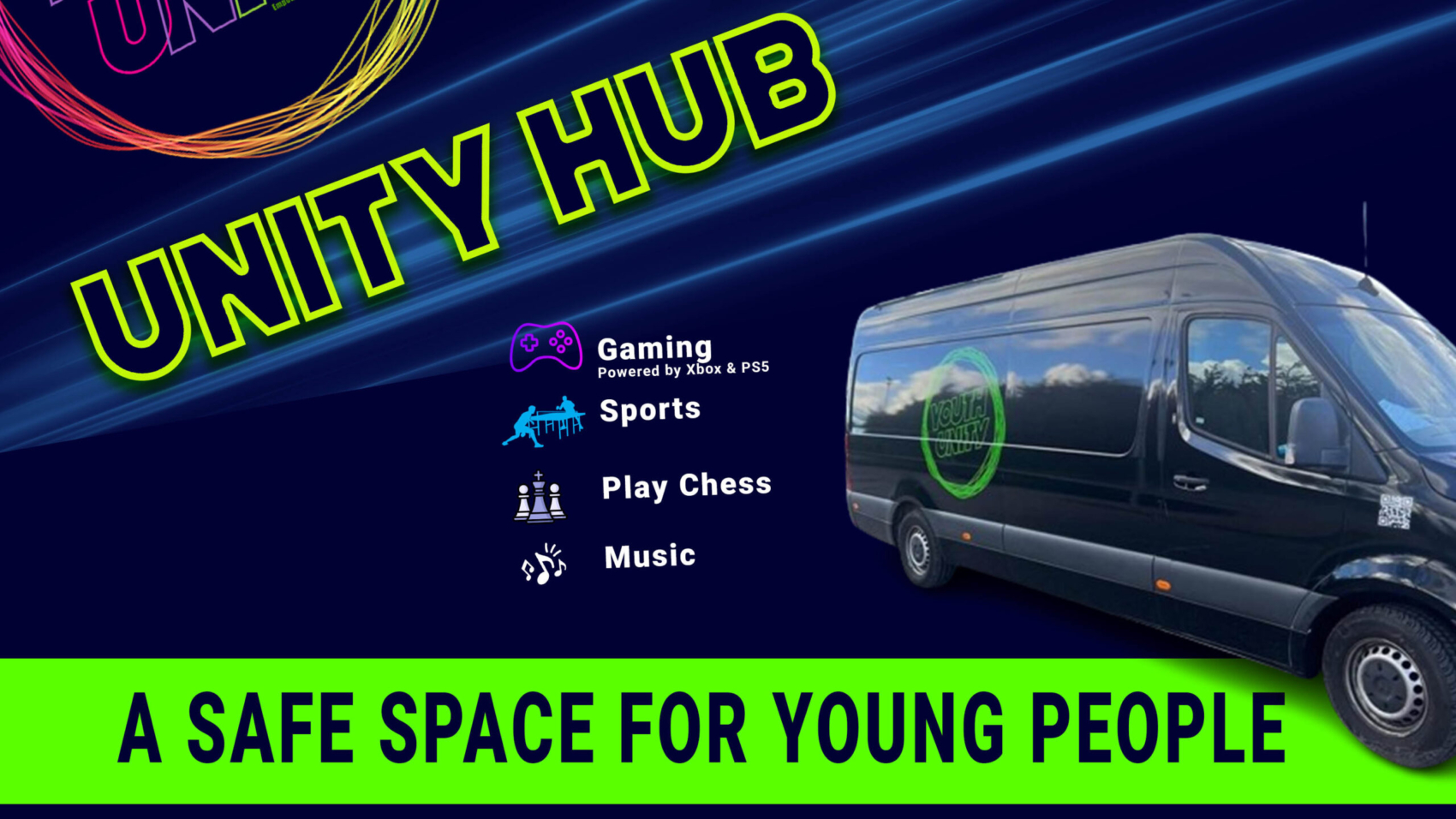
Youth Unity is delivering a series of positive activity and youth engagement sessions through our Mobile Unity Hub, bringing safe, creative and inclusive opportunities directly into local communities.

This outreach-based programme is designed to meet young people where they are offering structured activities, trusted youth workers and welcoming spaces that encourage connection, confidence and positive use of time.


What the service offers

Through the Mobile Unity Hub, young people can take part in a wide range of activities, including:

  • 🎮 Gaming and interactive activities

  • ⚽ Pop-up sports and physical activity

  • 🎶 Music, creative and social sessions

  • 🤝 Informal support, conversation and signposting

Sessions are relaxed, youth-led and designed to feel accessible rather than formal. Young people can drop in, take part at their own pace and build relationships with consistent, trusted staff.


Why this matters

Young people consistently tell us they want:

  • Safe spaces to spend time

  • Activities that feel relevant and enjoyable

  • Adults who listen without judgement

  • Opportunities close to home

The Mobile Unity Hub helps reduce isolation, boredom and risk by offering positive alternatives, strengthening community presence and amplifying youth voice through creative engagement.


Our approach

Youth Unity’s work is rooted in:

  • Relationship-based youth work

  • Trauma-informed and safeguarding-led practice

  • Inclusion, accessibility and youth voice

  • Partnership working with local services

Alongside activities, our team observes emerging issues, supports early conversations and helps connect young people to further support when needed.

WhatsApp Image 2026-02-02 at 20.14.11

KAILO Session 4

Small Circle Session 4: Mapping the System Part 2

Date: 28 January 2026
Time: 4:30pm – 7:00pm
Location: Youth Unity / Kailo session space

Session focus

In Session 4, the group continued their system-mapping work, building on the 5 Whys and root-cause analysis from the previous week. The aim was to move beyond individual experiences and explore the patterns, structures and beliefs that sit underneath the issues young people face — particularly around belonging, safety and opportunity.

This session used the Systems Iceberg model to help young people understand how visible events are shaped by deeper, often hidden, factors.


What we set out to do

The aims of this session were to:

  • Help young people see how the issues they identified link to wider systems

  • Explore patterns and structures that repeatedly affect their lives

  • Deepen earlier discussions rather than rushing to solutions

  • Ensure no important issues were missed from the group’s mind-mapping work

By slowing the process down, the group were encouraged to think critically about why challenges keep happening — not just what happens.


Check-in and reflection

We began with a simple one-word check-in, giving each young person space to reflect on how they were arriving that day. This helped ground the group and acknowledge that everyone brings different experiences into the room.

The group then revisited photographs they had shared previously, using them as prompts to discuss:

  • Why they chose that image

  • Whether it represented something positive or something that needs to change

  • How it connected to the issues on the shared maps

This discussion helped bridge personal experience with collective understanding.


Building on last week’s work

Young people revisited the mind maps, problem statements and icebergs created in Session 3. Individually, they reflected on which issue they felt most strongly about and whether it had already been explored in depth.

They were invited to:

  • Add to existing icebergs where deeper discussion was needed

  • Identify new issues that hadn’t yet been examined

  • Use post-its to capture thoughts without pressure to speak immediately

This approach ensured quieter voices were included and gave the group ownership over what was prioritised.


Mapping the system: going deeper

Facilitators introduced the idea that most of what we see is only the “tip of the iceberg.” Beneath visible events sit recurring patterns, structural issues and shared beliefs that keep problems in place.

Working in small groups, young people:

  • Created new system icebergs from problem statements

  • Added deeper layers to existing icebergs

  • Used prompt questions to explore structures and mindsets shaping their experiences

Groups were split across different spaces, allowing focused discussion while keeping the energy manageable.


Sharing and connecting the dots

After a break, the group came back together to share their icebergs. As they listened to each other, young people began to notice strong overlaps:

  • Repeated structural barriers appearing across different issues

  • Similar beliefs and assumptions shaping multiple challenges

  • Connections between school, community, services and wider society

The group were asked a key question:
“If you could shift one thing in this system to make the biggest difference, what would it be?”

This helped move thinking from description towards insight — without jumping prematurely to solutions.


Reflections and next steps

The session closed with a collective reflection on what had emerged and what it means for the next phase of the Kailo project. Young people recognised that many challenges they face are not individual failings, but the result of systems that were not designed with them in mind.

The insights from this session will directly inform:

  • The project’s emerging themes

  • Youth-led recommendations

  • Future sessions focused on change, influence and action


Why this matters

Session 4 marked an important turning point — shifting from naming problems to understanding systems. This deeper analysis is essential to ensuring that the voices of young people lead to meaningful, informed change rather than surface-level responses.

Man smokes a joint. Medical marijuana use and legalization of the cannabis, light drugs concept

Cannabis

Cannabis: What Young People and Parents Need to Know

Cannabis is one of the most commonly used substances among young people, and in recent years we have seen changes in how it is used, how strong it is, and how easy it is to access.

At Youth Unity, young people regularly talk to us about cannabis — sometimes seeing it as “normal”, “natural”, or less risky than other drugs. However, cannabis can have serious short- and long-term impacts, particularly on young people whose brains are still developing.

This page explains what cannabis is, why young people may use it, the risks involved, and what parents and carers should look out for.


What Is Cannabis?

Cannabis is a drug made from the cannabis plant and is most often:

  • Smoked in joints

  • Used in vapes

  • Mixed into food or sweets (edibles)

The main psychoactive ingredient is THC (tetrahydrocannabinol), which affects mood, thinking, memory and coordination.

Today’s cannabis is often much stronger than in previous years, meaning the effects can be more intense and the risks higher.


Why Do Young People Use Cannabis?

Young people tell us they may use cannabis because:

  • Friends are using it

  • They believe it helps with stress or anxiety

  • It feels socially normalised

  • It is easier to access than many adults realise

  • They think it is safer than other drugs

Unfortunately, this can lead to regular use without fully understanding the consequences.


Health Risks for Young People

🧠 Brain Development and Mental Health

The teenage brain continues developing into the mid-20s. THC can interfere with this development and has been linked to:

  • Problems with memory and concentration

  • Reduced motivation

  • Increased anxiety and low mood

  • Higher risk of mental health difficulties, including paranoia and psychosis for some individuals

Regular use can make school, college and training more difficult.


🔁 Addiction and Dependence

While not everyone becomes addicted, young people are more vulnerable to cannabis dependence. This can involve:

  • Feeling unable to relax or sleep without it

  • Using more often than intended

  • Irritability and mood changes when not using

  • Losing interest in hobbies or activities

Dependence can develop gradually and often goes unnoticed at first.


❤️ Physical Health Risks

Smoking cannabis can also affect physical health, including:

  • Lung irritation and breathing problems

  • Increased heart rate and blood pressure

  • Poor sleep patterns

  • Reduced physical fitness

When mixed with tobacco, the risks increase further.


What Should Parents and Carers Look Out For?

Cannabis use is not always obvious, especially when vaping or edibles are involved.

Possible signs include:

  • Smell of cannabis or sweet, fruity scents

  • Bloodshot or tired-looking eyes

  • Changes in mood, motivation or behaviour

  • Declining school attendance or performance

  • Finding rolling papers, vapes, grinders, or small plastic bags

None of these signs alone confirm use, but patterns can be important.


Talking to Young People About Cannabis

If you are concerned:

  • Try to stay calm and open

  • Ask what they know about cannabis

  • Share accurate information rather than scare tactics

  • Let them know support is available if they want to cut down or stop

Many young people use cannabis to cope with stress, anxiety or difficult experiences, so understanding why is just as important as addressing the behaviour.


How Youth Unity Supports Young People

Youth Unity works with young people across London and surrounding areas through:

  • Mentoring

  • Wellbeing programmes

  • Outreach and detached youth work

  • Creative and sports-based interventions

We create safe spaces where young people can:

  • Talk honestly about substance use

  • Learn about risks and consequences

  • Access trusted adults

  • Be supported to make healthier choices

Where needed, we also help young people access specialist services.


Final Message

Cannabis is often seen as harmless, but for young people it can have real impacts on mental health, education, motivation and long-term wellbeing.

Early conversations, accurate information and supportive relationships are key to reducing harm and helping young people stay safe.

If you are worried about a young person, you do not have to manage it alone — support is available.

➡️ For advice or support, contact Youth Unity or speak to your school, GP or local youth service.

Stockholm, Sweden Jan 21, 2025 Nicotine pouches for sale in a duty free shop at Arlanda Airport.

Tobacco Pouches (SNUS)

Tobacco Pouches (Snus): What Young People and Parents Need to Know

Over recent months, we’ve seen a growing number of young people using tobacco and nicotine pouches, often referred to as “snus”. These products are becoming more visible in local shops, frequently displayed in bright, colourful tins on shop counters, which can make them look harmless — or even similar to sweets.

However, despite how they are marketed and perceived, snus and nicotine pouches are not risk-free, especially for young people.

This blog explains what they are, why young people are using them, the health risks, and what parents and carers should look out for.


What Are Snus and Tobacco / Nicotine Pouches?

Snus and similar products are small pouches placed between the upper lip and the gum. They release nicotine directly into the bloodstream through the lining of the mouth.

Some pouches contain tobacco, while others contain synthetic nicotine — but both are designed to deliver high levels of nicotine quickly.

They are often:

  • Mint or fruit flavoured

  • Sold in bright packaging

  • Small and easy to hide

  • Used without producing smoke or vapour

This can make them appear less harmful than smoking or vaping, but this is misleading.


Why Are Young People Using Them?

Young people tell us that tobacco and nicotine pouches are:

  • Easy to buy in local shops

  • Highly visible at checkout counters

  • Seen as “not as bad as vaping or smoking”

  • Easy to use discreetly in school or at home

Because they don’t produce smoke or vapour, they are sometimes viewed as low-risk, when in reality they still expose young people to addictive levels of nicotine.


Health Risks and Consequences

⚠️ Nicotine Addiction

Nicotine is highly addictive, particularly for developing teenage brains. Regular use can lead to:

  • Strong cravings

  • Difficulty concentrating without nicotine

  • Mood changes and irritability

  • Increased risk of progressing to other nicotine products

Once dependency develops, stopping can be extremely difficult.


🦷 Gum and Dental Damage

Because the pouch sits directly against the gum, long-term use can cause:

  • Gum irritation and inflammation

  • Gum recession (where the gum pulls away from the teeth)

  • Increased tooth sensitivity

  • Mouth sores and ulcers

  • Tooth staining and decay

In some cases, damage can become permanent and require dental treatment.


❤️ Longer-Term Health Concerns

While research is still developing, smokeless tobacco and nicotine products have been linked to:

  • Increased risk of oral health conditions

  • Higher blood pressure and heart strain

  • Potential links to oral cancers with long-term tobacco exposure

No nicotine product is completely safe — especially for young people whose bodies and brains are still developing.


What Should Parents and Carers Look Out For?

Because these products are small and discreet, they can be easy to miss.

Signs may include:

  • Small round tins or sachets in pockets or bags

  • Young people frequently placing something under their lip

  • Complaints of sore gums, mouth pain, or ulcers

  • Increased irritability or mood swings

  • Strong mint smells on breath

It’s also worth being aware that many young people don’t realise these products contain nicotine, or how addictive they can be.


Talking to Young People About Snus and Nicotine Pouches

If you’re concerned, try to:

  • Stay calm and non-judgemental

  • Ask what they know about the product

  • Explain the health and addiction risks clearly

  • Offer support rather than punishment

Many young people start using these products due to peer pressure or misinformation, not because they fully understand the consequences.


How Youth Unity Supports Young People

At Youth Unity, we regularly talk with young people about:

  • Nicotine addiction

  • Peer pressure

  • Making informed choices about health

  • Where to access help if they want to stop

Our wellbeing, mentoring and outreach programmes provide safe spaces for young people to ask questions, share concerns, and get reliable information without judgement.

If you are worried about a young person or would like support, please get in touch with us through our website.


Final Message

Snus and tobacco or nicotine pouches are not harmless alternatives to smoking or vaping. They are designed to deliver nicotine efficiently and can lead to addiction and long-term dental and health problems, particularly for young people.

Raising awareness early — among both young people and parents — is key to preventing long-term harm.

➡️ If you’d like support or advice, contact Youth Unity or speak to your school or GP for further guidance.