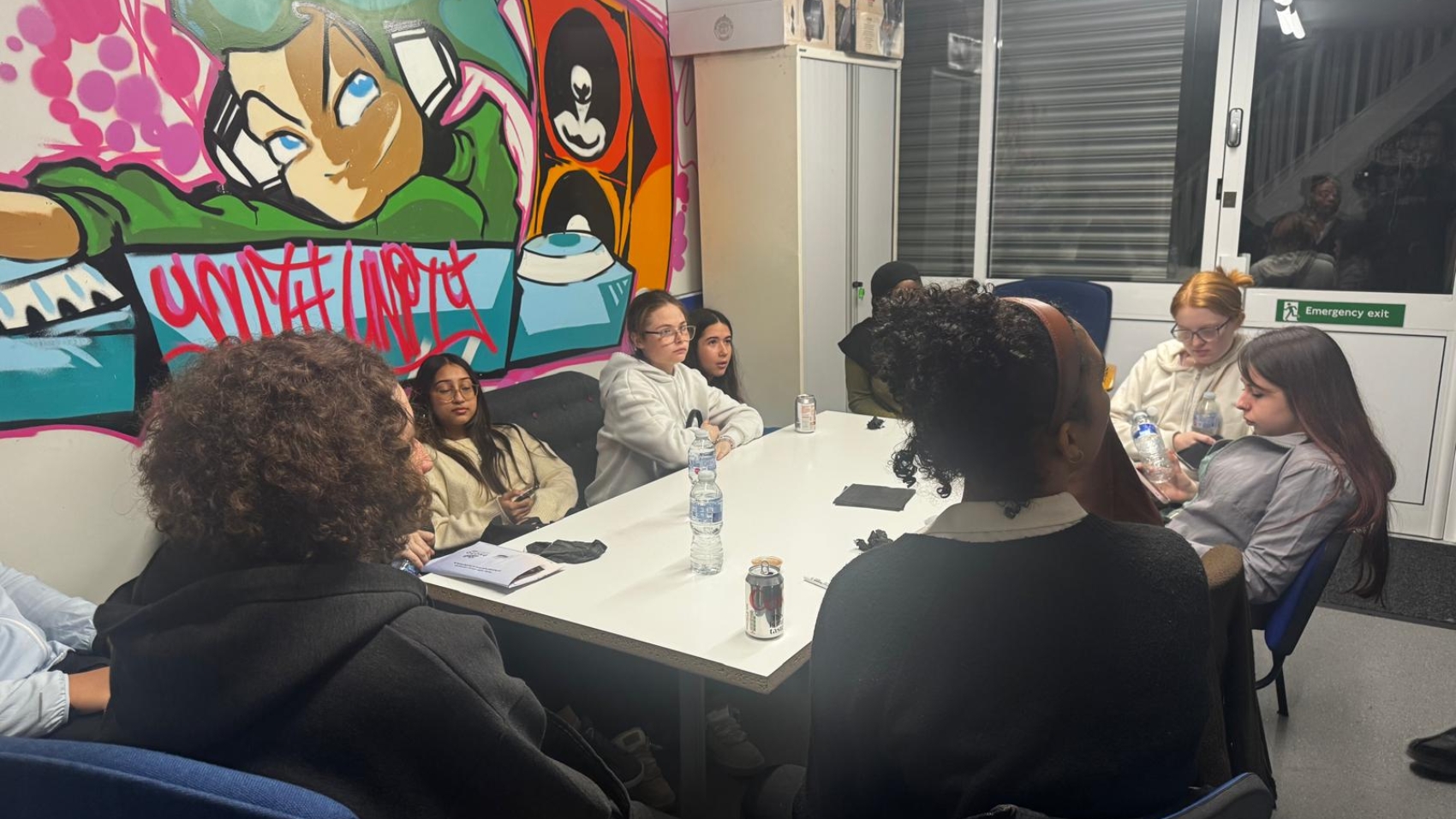
Screenshot

February Half Term Rota

During the school holidays, our Youth Unity Media Van will be out across local communities, bringing positive activities directly to young people where they are. Look out for us in your area, whether you want to get involved in gaming, try some sports activities, explore creative media, or simply stop by for a friendly chat, our team will be there to welcome you.

Our outreach sessions create safe, relaxed spaces where young people can connect, have fun, and access support if they need it. Come and say hello, meet the team, and find out more about the opportunities available near you.

February Half Term Outreach Schedule
Day Date Time Location Address / Meeting Point
Mon 16th 12.30pm – 3pm Dartford Town Centre – Outside NatWest Bank
Tues 17th 12.30pm – 3pm Gravesend McDonald's, Town Centre
Tues 17th 3:30pm – 6pm Havering Farnham Road, Harold Hill (Hilldene)
Wed 18th 12:30pm – 3pm Dartford Town Centre – Outside NatWest Bank
Wed 18th 3:30pm – 6pm Medway Gillingham Town Centre (Opposite Costa Coffee)
Thur 19th 4pm – 6:30pm Thamesmead, London By the Library, Cygnet Square
Fri 20th 3:30pm – 5:30pm Havering Elm Park – Outside Sainsbury's
WhatsApp Image 2025-09-06 at 19.12.49 (1)

Young People supporting Young People

Celebrating Youth-Led Innovation: Building Mentoring Frameworks with Clear Pathways and Purpose

At Youth Unity, we strongly believe in creating opportunities for young people not only to receive support, but to help shape how that support is delivered. One of the things we are most proud of this year is the incredible initiative shown by one of our young mentors, who, at just 23 years old, has designed a full set of structured mentoring frameworks to support young people across different stages of their lives.

These frameworks were developed to bring consistency, clarity, and clear end goals to mentoring relationships, helping young people understand what they are working towards and how each session supports their personal development. They also give schools, parents, and partners confidence that mentoring is not just supportive, but purposeful, measurable, and safely delivered.

What Do the Frameworks Cover?

The frameworks span multiple areas of need and age groups, including:

  • Year 6–7 Transition Mentoring – supporting confidence, emotional wellbeing, coping strategies, and school readiness during the move from primary to secondary school, with structured 6-, 8- and 12-week pathways and clear outcomes around belonging, peer relationships, and engagement.

Yr 6-7 transition

  • Emotional Regulation and Conflict Resolution Mentoring – a trauma-informed, strengths-based approach for young people aged 11–18 who struggle with managing emotions, triggers, and relationships, with defined eligibility criteria and clear safeguarding boundaries.

Emotional and Regulation Mentor…

  • Mental Health and Emotional Wellbeing (Early Help) Mentoring – focused on low to moderate emotional needs, helping young people build coping strategies, confidence, and healthy help-seeking behaviours, while clearly identifying when specialist or clinical services are required.

Youth Unity Mentoring framework…

  • Life Skills and Independence Mentoring (16–25) – supporting young people to build practical skills such as time management, budgeting, self-care, and problem-solving to prepare for independent living and adulthood.

Life skills and Independence

  • Employment and Training Mentoring – helping young people aged 16–24 develop CVs, interview skills, career awareness, and realistic progression plans into education, training, or employment.

Each framework includes:

  • Clear eligibility and exclusion criteria
  • Defined session structures
  • Adaptable 6-, 8- and 12-week pathways
  • Outcomes that can be measured and reviewed
  • Built-in reflection and planned endings, supporting healthy transitions rather than dependency

Blending Digital Tools with Relationship-Based Practice

Alongside Youth Unity’s accredited training programmes and safeguarding frameworks, these mentoring pathways also integrate the Ambition Project (https://mynd-app.com/), which we have permission to use as part of our delivery.

The Ambition Module supports young people to:

  • Track goals and progress
  • Reflect between sessions
  • Build self-awareness and motivation
  • Stay engaged with their development outside of face-to-face mentoring

This blended approach allows us to combine trusted relationships with practical digital tools, helping young people build skills that transfer into everyday life, education, and work.

Young People Supporting Young People, With Professional Backing

What makes this even more powerful is that these frameworks were created by someone who understands, first-hand, the realities young people face today. This is a clear example of youth-informed practice, where lived experience, professional standards, and safeguarding expectations come together.

At the same time, these frameworks sit within Youth Unity’s wider organisational systems:

  • Case management and safeguarding oversight
  • Professional supervision
  • Accredited training and continuous development

This ensures that while young people are helping shape support, it is always delivered safely, ethically, and in line with statutory expectations.

Growing Talent From Within

We are incredibly proud to support the growth and development of our own staff and mentors. Creating space for initiative like this reflects our wider commitment to:

  • Building future youth work leaders
  • Supporting professional development
  • Valuing innovation at every level of the organisation

This work shows what can happen when young professionals are trusted, supported, and given the opportunity to lead not just in delivery, but in designing the systems that support young people to thrive.

1766011368518

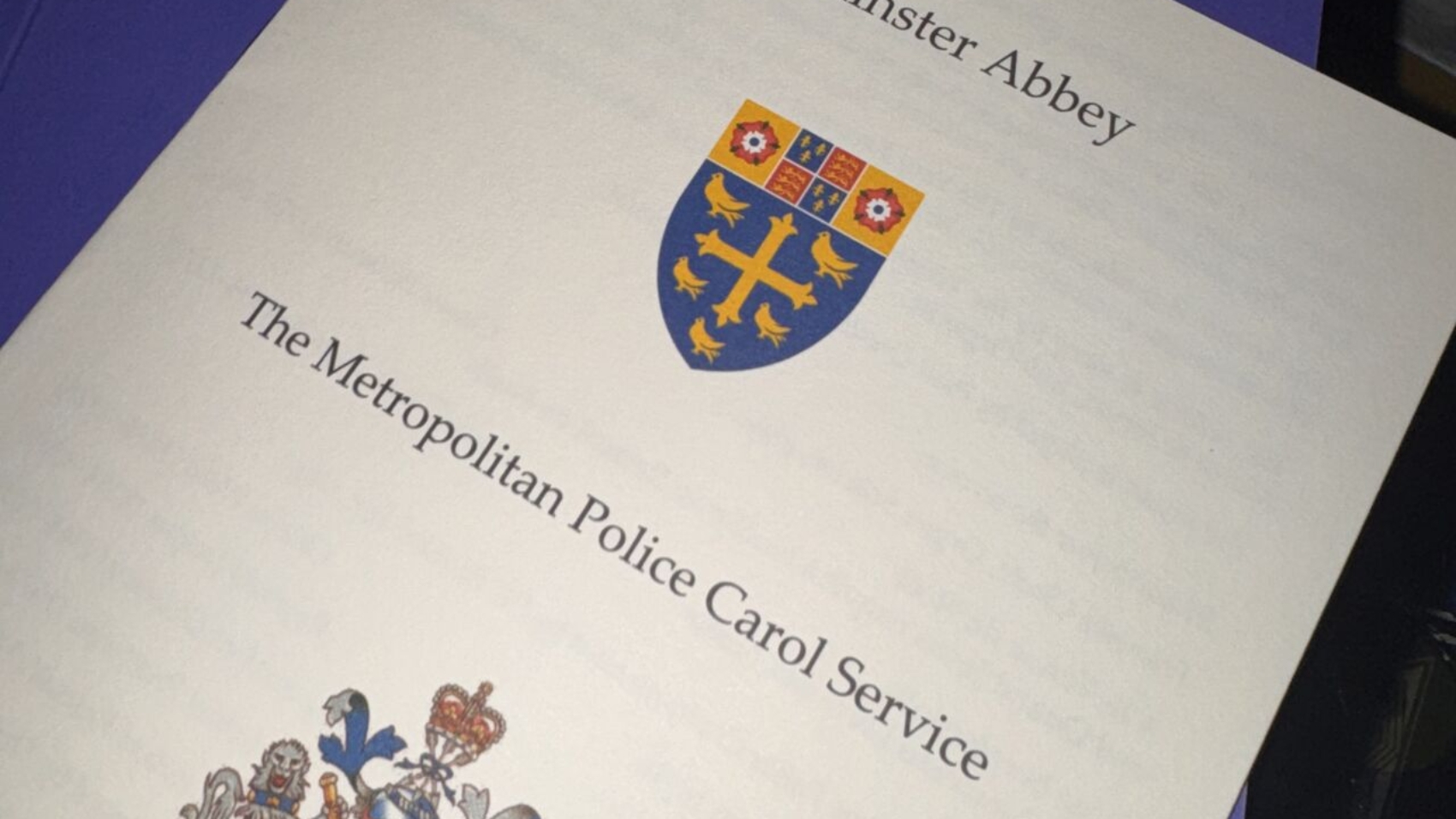
Police Christmas Choir

An Evening of Reflection and Partnership at Westminster Abbey

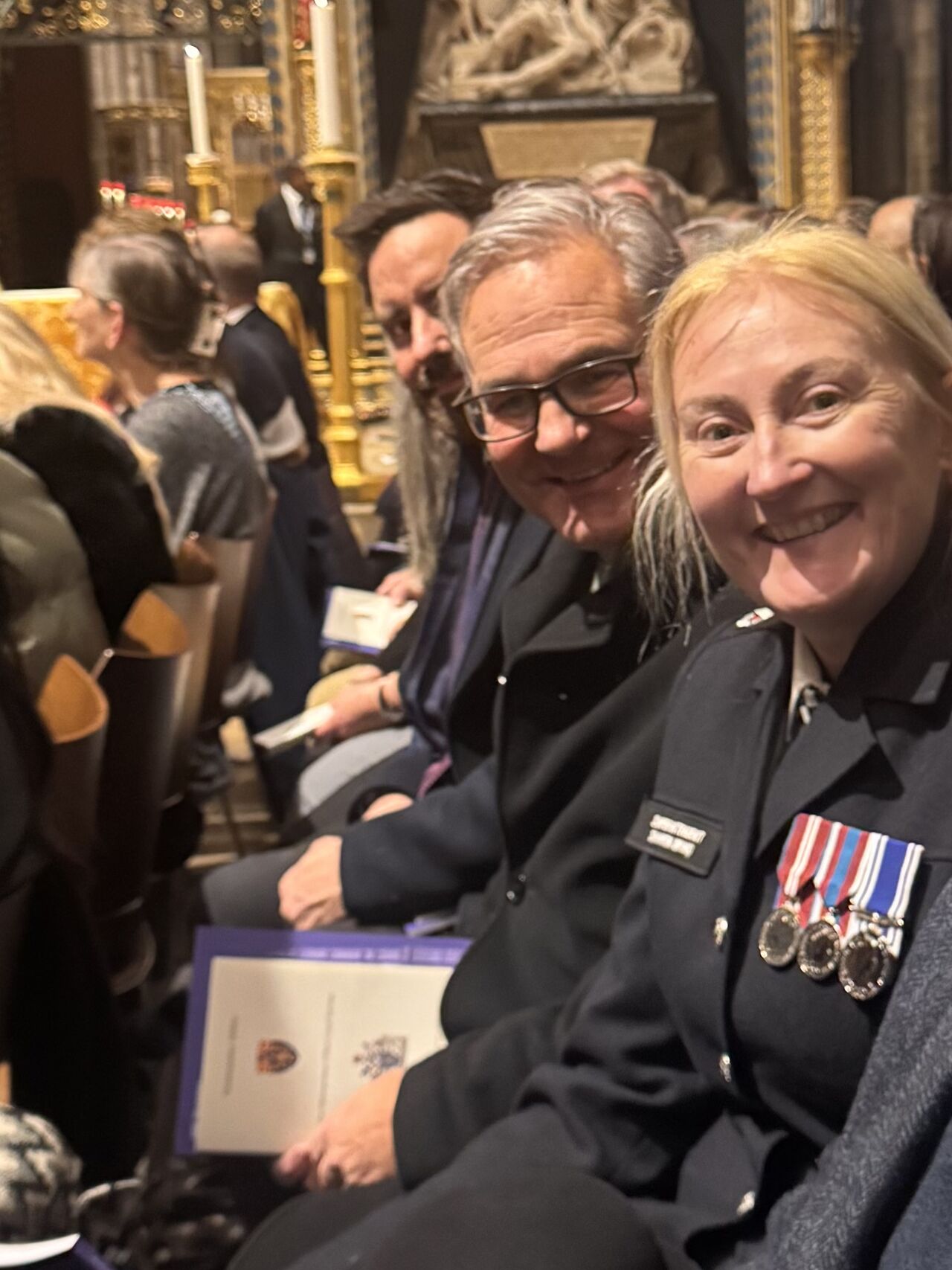
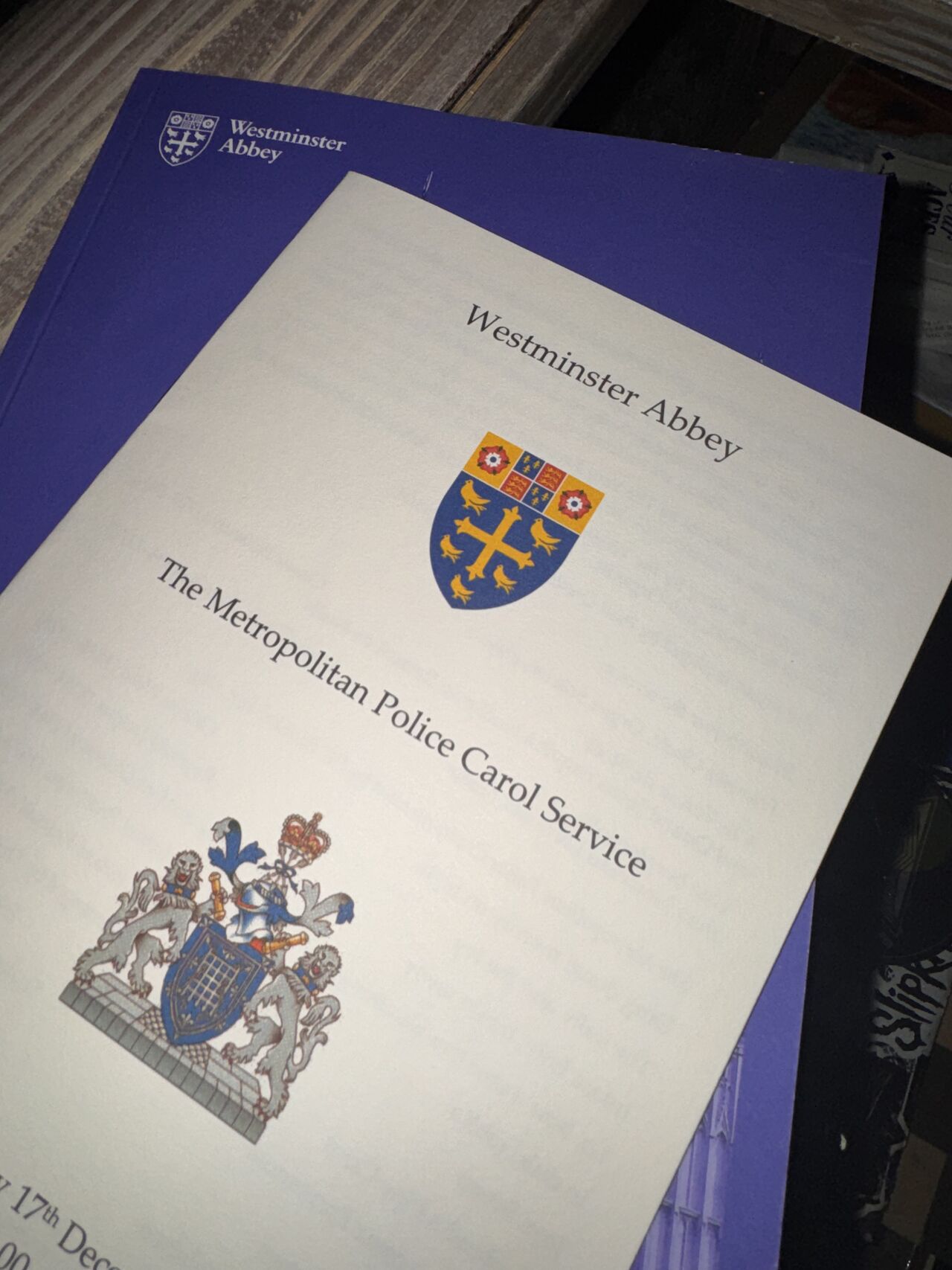
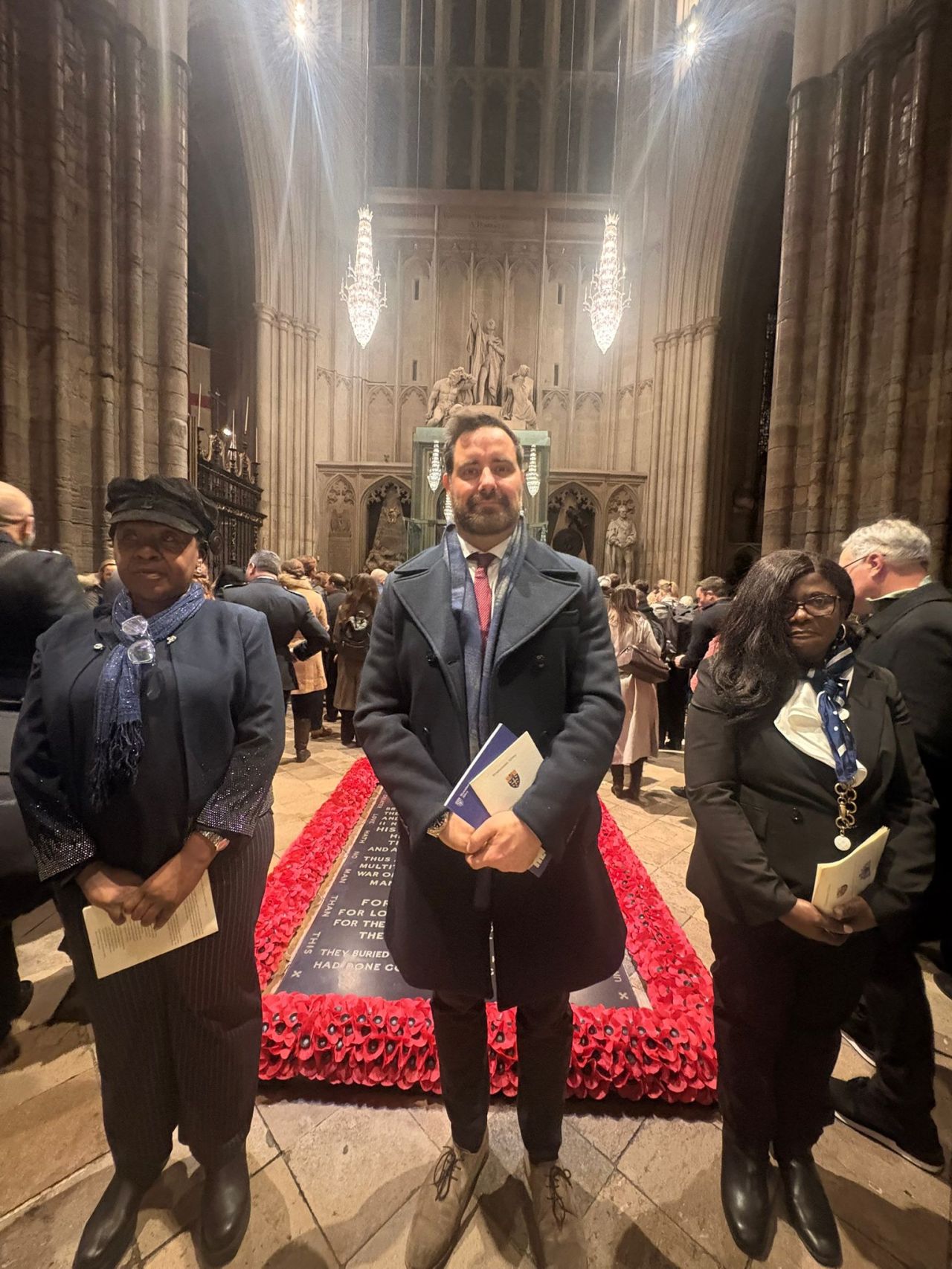
Last night, members of the Youth Unity CIC team were honoured to attend the Metropolitan Police Annual Christmas Carol Service at Westminster Abbey, following a kind invitation from our colleagues in the Metropolitan Police.

Set within the incredible surroundings of the Abbey, the evening created a warm and reflective atmosphere, bringing together partners, frontline professionals and community organisations to mark the end of another demanding year of public service. The carols, readings and shared moments of quiet reflection offered a chance to pause, reconnect and recognise the collective effort that goes into keeping our communities safe and supported.

At Youth Unity, partnership working sits at the heart of everything we do. Our collaboration with police, councils, schools and community services allows us to reach young people earlier, provide positive opportunities, and build trusted relationships that support long-term change. Events like this are an important reminder that behind every programme and every intervention are people who care deeply about young people and their futures.

We would like to thank the Metropolitan Police for the invitation and for hosting such a thoughtful and welcoming event. It was a genuinely lovely way to step into the festive season and reflect on the value of working together.

As the year comes to a close, we want to wish all of our partners, young people, families and supporters a peaceful and joyful holiday period, and we look forward to continuing our work together in the new year.

Magnifying glass document management checklist. Magnifying glass check mark approved. Audit certificate evaluate examination reviewing. Magnifying inspector inspect quality Assurance selection summary

Views Case Management

Investing in Better Safeguarding and Smarter Systems

At Youth Unity, young people are at the heart of everything we do. Safeguarding, trust and accountability are not just responsibilities we talk about they are built into our daily practice.

That’s why we’ve recently invested in a new case management system through Substance. This system allows us to securely log our sessions, record the support we provide, and ensure that important information is kept safe, accurate and consistent. Most importantly, it strengthens our safeguarding processes and helps us respond more effectively when young people need us.

We also know that our mentors’ time is best spent building relationships, supporting young people and being present, not completing endless paperwork. This system has been chosen to make recording information simpler, faster and more meaningful, allowing our team to focus on what matters most.

In addition, the system enables us to produce more in-depth case studies and structured reports. This is essential in helping us demonstrate impact clearly, meet the requirements of our funders, and ensure transparency and accountability across our work.

While there is a learning curve, this investment is about long-term impact. It will help us track progress more clearly, identify concerns earlier, and evidence outcomes more effectively.

This change reflects our ongoing commitment to improving our services and ensuring that every young person we work with is supported safely, responsibly and with care.

WhatsApp Image 2026-01-14 at 20.49.03

Kings Garden Party 2025

Youth Unity CIC at the King’s Garden Party — A Day We’ll Never Forget

This year, Youth Unity CIC had the incredible honour of being invited to attend the King’s Garden Party at Buckingham Palace, in recognition of the work we do with young people and communities across our local areas.

It was one of those moments where you stop, look around, and think… how did we get here? From community centres, school halls, street-based outreach and youth clubs, to standing in the gardens of the Palace — it was truly a day we will never forget.

We were lucky enough to be given two tickets, which, if we’re honest, felt both amazing and slightly cruel — because if it were up to us, we would have brought the whole Youth Unity team along. But let’s be realistic… the King may have been slightly overwhelmed if our entire staff team, mentors, coaches and youth workers had all turned up together!

One of the highlights of the day was seeing His Majesty the King up close and in person, something neither of us will ever quite get over. It was a powerful reminder that the work happening every day in local communities — often quietly, behind the scenes — really does matter and is being noticed.

For us, this invitation wasn’t just about a special day out. It was about recognition of:

  • the dedication of our frontline staff and volunteers

  • the trust placed in us by young people and families

  • the strength of our partnerships with councils, police, schools and community organisations

  • and the belief that early support, positive opportunities and strong relationships can change lives

We are incredibly grateful to everyone who has supported Youth Unity along the way — from funders and commissioners, to local partners, parents, and most importantly the young people who allow us to walk alongside them in their journeys.

So yes… we had an amazing day, we enjoyed the sunshine, we soaked up the atmosphere, and we came home feeling proud, motivated, and even more committed to continuing the work we do.

And next time, Your Majesty… we’ll try not to bring the whole team. Probably.

WhatsApp Image 2024-08-22 at 07.52.13

Youth centre closures linked to greater risk of young people entering criminal justice system

Whilst youth services have been cut by 77% over more than a decade, violent offences among young people remain at unacceptably high levels warn the National Youth Agency (NYA), in its latest report, The social cost of youth work cuts: Preventing youth offending through youth work, published at the start of Youth Work Week, from 6 -12 November. Despite these startling figures, it costs four times more for a young person to enter the criminal justice system (£200,000 by the age of 16), than it does for them to avoid it through youth work provision (less than £50,000). (1)

The social cost of youth work report provides an analysis of 74 sources of academic literature and research evidence relating to the impact of youth work on young people in contact with the youth justice system. The report shows a clear association between reduced funding for youth provision and an increase in crime rates for some young people. 

Despite this, open access youth service expenditure has been disproportionately affected by austerity cuts. Furthermore, young people themselves are crying out for safe spaces with 24% of young respondents to a recent survey by the youth charity OnSide, reporting that they do not have a safe space to go to where they feel they belong. (2)

Whilst convictions have fallen by a third, for every 1,000 children in the population, 4.6 are still in the youth justice system, and their needs are becoming increasingly complex in the wake of the pandemic, as mental health rates soar and amid a cost-of-living crisis. (3)

Meanwhile, youth work saves £500 million on public spending through crime reduction alone and social return on investment research reveals that £1 investment in youth work is estimated to return £3.20 – £6.40 of value. (4)

The report cites the 2020 All-Party Parliamentary Group for Knife Crime focused on the impact of youth centre closures across the country, which revealed that each reduction in the number of youth centres corresponded to an increase in knife crime. This trend is echoed in a PhD study, completed earlier this year, which reviewed London youth centre provision published in 2023 by Carmen Villa-Llera, in the Economics Observatory at the University of Warwick. The research found that crime participation amongst 10-15 year olds increased by 10% in those London boroughs affected most by youth centre closures between 2010-2019. Furthermore, young people in these areas are 12% more likely to be suspended from school since the reduction in youth provision. (5)

Examples of where youth work is having a positive impact on youth crime rates, include the Linx Youth Project, Middlesbrough, which saw a significant reduction in crime amongst young people as a result of youth workers delivering support in the community (detached youth work), with the number of first-time entrants to youth justice decreasing by 79% over a four year period from 2016 to 2020. Furthermore, the project evaluation found that the social impact value for the service is £5.50 for every £1 invested. (6)

Meanwhile a Redthread youth work team working in the Emergency Department at St Mary’s hospital has brought about a 59% reduction in young people’s involvement with violence, and 37% reduction in involvement with crime, as a direct result of their engagement with a youth worker in the hospital.  (7)

The launch of The social cost of youth work cuts report from National Youth Agency coincides with their annual Youth Work Week national campaign, which this year is focussing on the added value that youth workers bring to the outcomes of young people through providing their particular support in a range of contexts and professional settings.  

Leigh Middleton, Chief Executive, National Youth Agency, said: “A lack of youth work isn’t just failing our young people, it’s also putting a strain on the public purse. Where youth workers are working in partnership with other allied professionals such as prison officer, youth offending teams, healthcare workers and teachers, we know that they are able to use their particular set of skills to capitalise on that ‘reachable moment’ and work with, and for, the young person to help them recognise that they can make positive choices about their future lives. 

“The NYA is working to build back the skills and capacity of the sector working closely with our academic and training partners, and through schemes such as the DCMS funded bursary and leveraging the government’s apprenticeship levy to enhance opportunities to attract people to youth work and to retain and upskill those already working in the sector.” 
WhatsApp Image 2024-11-04 at 14.58.20 (3)

BEFFTA Award, Best Youth Organisation

We are thrilled to announce that Youth Unity has won the prestigious award for Best Organisation at the BEFFTA Global Awards 2024! The event, held on 26th October as part of the UK’s Black History Month celebrations, was an incredible experience for our team. It was an honour to be recognised among such inspiring global leaders, and the evening was made even more special with our team attending in tuxedos, adding to the glamour of this star-studded event.

The BEFFTA (Black Entertainment Film Fashion Television and Arts) Awards, founded by Her Excellency Professor Pauline Long, celebrates outstanding achievements in the Black and ethnic minority communities. Being part of this prestigious event is a momentous occasion for Youth Unity, and we are immensely proud to have received this recognition for our work.

We would like to extend our gratitude to BEFFTA and everyone involved in making the evening unforgettable. It was a night filled with joy, pride, and a strong sense of community, and we look forward to continuing our mission of making a positive impact on the lives of young people.

Stay tuned for more updates as we continue to strive for excellence in all that we do!

We want to take a moment to express our deepest gratitude to our incredible team at Youth Unity. Their dedication, passion, and unwavering commitment to supporting young people are the driving force behind our success. Winning the award for Best Organisation is a testament to their hard work and the positive impact they have on the community every day. We are so proud to have such an amazing team, and this recognition would not have been possible without each and every one of them.

Thank you for all that you do!

We want to take a moment to express our deepest gratitude to our incredible team at Youth Unity. Their dedication, passion, and unwavering commitment to supporting young people are the driving force behind our success. Winning the award for Best Organisation is a testament to their hard work and the positive impact they have on the community every day. We are so proud to have such an amazing team, and this recognition would not have been possible without each and every one of them.

Thank you for all that you do!

Finally, we would like to express our heartfelt gratitude to Kristy Prince for putting us forward for this nomination. Her unwavering support from the very start of Youth Unity has always been deeply appreciated, and we are truly thankful for her continued belief in our work.

Tips-to-help-your-child-with-the-transition-from-primary-to-secondary-school2

Teachers ‘providing food and clothes’ for disadvantaged pupils

  • SOURCE:
  • Rumeana Jahangir
  • BBC News
  • 25 April 2024

Teachers in the north west of England say they are having to go beyond their remit to give support to disadvantaged pupils, a survey has found.

About 520,000 (43%) pupils are estimated to be experiencing a range of external challenges that are impacting their education, according to the Action for Children charity.

Teachers said they were becoming the first port of call for parents who did not know where to get help, providing emotional support, and even essentials like food and clothing.

The charity has now called on the government to promote the use of family liaison officers in schools and make it a legal requirement for councils to provide early help services.

A spokeswoman for the Department for Education said they were providing “additional support for disadvantaged pupils”.

The Action for Children survey, which gained responses from about 800 teachers in north-west England, reported the most common barriers to education were:

  • living in an unstable family environment (68%)
  • behavioural or emotional issues (65%)
  • mental health challenges (55%)
  • poor attendance (46%)
  • poverty (44%)

‘You worry about them’

Many teachers said they were becoming the first port of call for parents who did not know where to get help.

They said they were increasingly having to go beyond their remit to provide emotional or family support or essentials like food and clothing.

Many teachers said it was hindering their ability to teach and they were experiencing an emotional toll on top of heavy workloads.

One secondary school teacher said: “When you’re not with them you’re worrying about them thinking, even though I feel like I’m at capacity, if I did this extra thing that could really make a difference.”

Just 3% of the region’s teachers polled believed that pupils facing challenges will reach their expected grades by the end of this academic year.

The charity said there was also a north-south divide, with teachers in the north and Midlands more likely than teachers in the south and east to report that at least half of their pupils were experiencing barriers.

Rosie, from Wirral, is someone who has received support from the charity.

It started when she had felt stressed with her school workload which ultimately impacted her relationship with her parents.

The 14-year-old told BBC Merseyside: “I felt that it changed my relationship with my parents but it also meant I had less free time because I was always working to get the homework done so that I wouldn’t get into trouble.”

The charity gave the family somewhere outside of the school environment to turn, when they were given help from external trained workers.

Rosie’s mother, Isabel, said: “We try to be a supportive family and not every family has that.

“But also we are a family where parents work and in order to maintain that life… sometimes you need someone somewhere else to go to.”

Government funding

Helen McKee, Action for Children’s operational director for the North West, said: “In this general election year, it’s vital that all political parties focus on children – including what they need both inside and outside school.”

The charity is calling on government to support all councils to integrate their early help, early intervention and family services so there is “one front door”.

A government spokeswoman said: “We are taking a range of steps to improve attainment and outcomes for all pupils, with additional support for disadvantaged pupils.”

She said they had invested £1bn in tutoring since the pandemic and are increasing pupil premium funding to £2.9 billion in 2024-25.

“This comes on top of our ongoing £10 million Behaviour Hubs programme and £9.5 million for up to 7,800 schools and colleges to train a senior mental health lead.

“Thanks to our fantastic teachers and school leaders, and our package of wide-ranging reforms, there were 440,000 fewer children persistently absent or not attending last year alone.”

WhatsApp Image 2023-05-05 at 18.44.42

PodgeSports

Sports Podge, held on the 5th of May at the Oval, was an amazing event organised by Phil Jones and his team, an event that brought people together through the power of sports. We were blown away by the concept and the execution of this event.

From the moment we arrived, we were impressed by the level of organisation. The wonderful food, top-notch entertainments, and great people we networked with throughout the day made the event truly unforgettable. The location at The Oval was also an ideal setting, providing a perfect backdrop to the exciting activities.

The atmosphere was lively and welcoming, making it easy for everyone to connect and enjoy themselves. We were thrilled to meet so many like-minded individuals who shared the same passion for sports and the desire to make a positive impact on the community.

In conclusion, Sports Podge was an amazing event that exceeded all our expectations. I enjoyed every moment of it, from the food to the entertainment, the people, and the activities. I can’t wait to attend the next one and see what Phil Jones has in store for us. It was truly an unforgettable experience!

Image of killer with machete in dark apartment with red light at night

Machetes and zombie knives could be banned in England and Wales

Machetes and zombie knives could be banned in England and Wales, with people selling them facing up to two years in jail, under government plans to close a legal loophole.

After complaints from police chiefs and MPs that some large, bladed weapons are excluded from current laws, the Home Office will consult the public over plans to ban their ownership and sale.

Certain blades that are “designed to look menacing” and “with the intention to threaten” are not currently prohibited but would be outlawed under proposed measures, the Home Office said.

Knife crime has increased by 9% in the past year and 34% in the past decade, to 45,000 offences.

This month a judge urged jurors to write to their MPs about the “shocking” availability of dangerous weapons online after a man was found guilty of killing an 18-year-old with a 22-inch zombie knife.

Under laws introduced in 2016, police can only confiscate and prosecute possession of zombie knives in private homes if they meet three criteria. The knives must have a cutting edge, a serrated edge and “images or words that suggest it is to be used for the purpose of violence”.

Inspired by horror films, the curved blades with serrated edges are often sold as collector’s items, but police say they are increasingly being carried by criminals.

Machetes have no such markings, while some retailers have been selling zombie knives without any writing or images on them or even packaging that would allow police to seize them.

While machetes and other similar knives can have legitimate uses in gardening and the agricultural sector, the Home Office said criminals were buying, selling and using larger bladed articles as weapons to intimidate and cause others serious harm.

The seven-week public consultation will define which machetes and large knives will be banned, inviting views to ensure proposals are targeted and balanced in order to keep our streets safe, the Home Office said.

The home secretary, Suella Braverman, said: “The thugs wielding these deadly knives aim to terrorise their victims and the public, and too often even carry out horrific or fatal attacks. They are emboldened by the cowardly idea that carrying these blades inflates their own status and respect.”

SOURCE: https://amp-theguardian-com.cdn.ampproject.org/c/s/amp.theguardian.com/uk-news/2023/apr/18/machetes-and-zombie-knives-could-be-banned-in-england-and-wales