Youth Unity

Researchers Reveal Kids Who Get More Hugs Have More Developed Brains

There’s nothing like the warmth and security of a loved one being enveloping you in their arms.  The simple act of giving and receiving genuine hugs can completely change your mood.  You feel loved, cared about, safe, and unique.  I’m not sure there is a single action that can replicate the feeling of giving and getting a hug.

It’s a good thing that giving is the same as receiving when it comes to hugs, right?  Now, science says you can be smarter for it. If you were about two feet long and weighed roughly 10 pounds, your brain would develop better.  Researchers reveal kids who get more hugs have more developed brains.

BABIES AND THEIR BRAIN DEVELOPMENT THROUGH TOUCH

When we think about learning, we consider reading, studying, using our hands, calculations, and other processes.  We started, as babies, we began exploring by touching things.  Of our five senses, touch is the first to develop.  From this, a newborn baby must navigate their new world.

According to an article from Stanford’s Medicine, Dr. Susan Crowe, an obstetrician, and director at Lucile Packard Children’s Hospital, outlines the nine instinctual stages right after birth.

Birth cry, relaxation, awakening, activity, resting, ‘crawling’ (a shifting movement toward the breast), familiarization, suckling, and sleep.”

As soon as physically safe for both mother and baby, it’s time for skin-to-skin contact and guiding the baby toward breastfeeding.

Just the holding of the baby within the first hour, regardless of breastfeeding, can help in normalizing the baby’s body temperature, heartbeat, and pattern of breathing.  For many babies, it also decreases the amount of crying.  Simultaneously, the mother releases more relaxation hormones.  This also becomes the bonding time for mother and baby. Should the partner of the mother also hold the baby, it begins the bonding time for them as well.

BENEFITS OF INFANT MASSAGE

Infant massages could be integrated into this bonding experience, as well.  The same article in Stanford’s Medicine notes a wide array of benefits. According to Maureen McCaffrey, a certified infant massage instructor at Packard’s Children Hospital, these benefits consist of:

  • Better sleep patterns for the baby
  • Baby appears more aware of being loved, secure, and accepted.
  • Improved digestion and bowel movements
  • Babies demonstrate more comfort by less fussy behavior
  • Weight gain improves
  • Mother and baby appear more relaxed
  • Neurological function in babies is improved

Another study done at the University of Washington aimed to locate the area of the brain in which a baby registers both “felt” touch and “observed touch.” This study proves babies can discern between an actual physical touch vs. an image of a hand touching another person.  The study found that by seven months old, a baby can not only understand the concept of their “self,” but also knows their body is separate from another person.

THE POWER OF TOUCH FOR BABIES

That knowledge is what established the foundation for mimicking others’ behavior as well as developing empathy.  The researchers discovered through specialized imaging that touch registers in the somatosensory cortex.  Depending upon if it was an actual touch, what part of the body the contact occurred in, or if it was an image, the location, and strength of the signal within the somatosensory cortex in which it was registered changed.

What was also fascinating was recognizing that the baby, before it can speak or know the words for body parts, already understands that their hand or foot moves similarly to another person’s.  Through imitating how the other person moves, the baby is also able to move.  It is this process which makes both imitations, and later, empathy, possible.

In a study of the opposing focus, researchers learned of detriment to children who don’t receive touch.  A report in Pediatrics Child Health, published in PMC, outlines the results of various studies, one of which was the result of providing touch to children who were previously deprived.  The study focused primarily on limb movement as a form of sensory stimulation.  They discovered that with 10 minutes a day of handling, over ten weeks, babies “spit up” less.Overthinkers, pay attention to this one!https://imasdk.googleapis.com/js/core/bridge3.437.0_en.html#goog_975658294Volume 90% 

The babies with 20 minutes of daily tactile stimulation, over ten weeks, increased in their developmental scores.  In the case of premature babies, stroking their limbs, and mild limb movement demonstrated weight gain, longer alertness, more mobility, better adaptation to repeated stimuli, and awareness of their bodies. After a year, they scored high on weight and growth and motor skills and had reduced mild neurological dysfunctional symptoms.

OXYTOCIN AND HUGS

Oxytocin is a hormone and neurotransmitter produced in our hypothalamus and released from our pituitary gland.  Its levels increase during breastfeeding, orgasm, and hugs.

In regards to the effect on babies and their development, oxytocin encourages bonding between a mother and her baby.  This might explain why breastfeeding increases a woman’s hormone levels. It tends to foster feelings of trust, closeness in relationships, and maternal instinct or care.  Ironically, this hormone was discovered by scientists at the Weizman Institute to be the construction crew for its own future paths of blood vessels while in an embryonic brain.  Therefore, it facilitates the baby’s ability to produce oxytocin after the brain, his or her brain, fully develops.

While oxytocin has been nicknamed the “love hormone” or the “hug hormone,” it is more complicated than what was initially perceived.  It originally was recognized as the hormone that, when released in our blood, aids in uterine contractions during childbirth and induces labor.  Over time, it was discovered that it has a different reaction when it is released into the brain.  It then has variable effects on our cognitive, emotional, and social behavior.

MORE EVIDENCE

In the journal Nature, an article was published with outlined various studies which have been performed attempting to single out the role of oxytocin on our behavior.

The study focused on the response of female mice, who had never birthed, toward crying babies.  Initially, the female mice had little to no reaction toward the babies.  They then injected the mice with oxytocin, and they began responding as a mother would.  Interestingly enough, before the injection, their brain neurons were a bit scattered and unfocused.

After the injection, the neurons came together in focus as a maternal mindset would. Additionally, researchers noted that oxytocin appeared to decrease specific neurons. While hearing the cries, the oxytocin enhanced the cries and made them more important.  The scientists theorize this may be related to why some mothers claim they can distinguish their baby’s cry from another.

Another study posted in the American Psychological Association tested women at various stages of their pregnancy – the first trimester, the third trimester, and the first month after birth.  What they discovered was that more women with high levels of oxytocin in the first trimester bonded better with their child.  The women who maintained high levels of oxytocin throughout the pregnancy and the month after developed a closer relationship with their children.  They tended toward singing special songs, using more personal, specific ways to feed or bathe their baby, etc.

UNDERSTANDING OXYTOCIN AND BRAIN DEVELOPMENT

The general understanding of how oxytocin affects our emotional and social behavior is a bit complex.  Essentially, if you are with an individual or group of individuals, and experience an interaction that triggers higher levels of oxytocin as a positive experience, then you will view those individuals as safe, trustworthy, and develop affection toward them.  Conversely, your brain will then see others who are different than those individuals as less credible, not safe, and you will be more guarded.  This is one method in which you establish your “tribe” of friends and establish who your family is.

Additionally, it may play a role in your social memory.  Through the release of oxytocin, your memory views a specific event more favorably than one where it didn’t release oxytocin.

What does this have to do with hugging your child and brain development?  Researchers continue to study oxytocin due to its very complex nature. However, it’s important we understand that how we perceive friends, family, and strangers and interact emotionally with each other is definitely a factor in our memory and behavior.  This holds true for a baby who is newly forming their understanding of the world based on how they interpret the actions of those around them.

FINAL THOUGHTS ON HUGS AND CHILDREN

Science may still be struggling to find the formula for why touch is so important and how our brain assimilates it in regard to our development, but most parents seem to understand it regardless.  The results from hugging a baby, a child, your teenager, or your spouse are ones most of us can recognize.

Source: www.powerofpositivity.com

skynews-adele-robinson-home-schooling_5252319

COVID-19: School closures could cost each child £40,000 in lost lifetime earnings

Source Sky News

Pupils who have lost six months of schooling can expect to lose approximately £40,000 each in income over their lifetime.

The cost of lost schooling to children affected by pandemic-related school closures has been estimated at £350bn.

A report by the Institute for Fiscal Studies says that pupils who have lost six months of normal schooling could lose approximately £40,000 each in income over their lifetime.

For 8.7 million school children in the UK, this makes a total of around £350bn and a “massive injection” of resources is needed to help them catch up, the IFS said.

The paper suggested learning time could be maximised by allowing students to repeat a school year, lengthening the school day, or extending the academic year.

The IFS paper warned: “Without significant remedial action, lost learning will translate into reduced productivity, lower incomes, lower tax revenues, higher inequality and potentially expensive social

“The lack of urgency or national debate on how to address this problem is deeply worrying.

“The necessary responses are likely to be complex, hard and expensive. But the risks of spending ‘too much’ time or resources on this issue are far smaller than the risks of spending too little and letting lower skills and wider inequalities take root for generations to come.”

Luke Sibieta, research fellow at the IFS, said: “The inescapable conclusion is that lost learning represents a gigantic long-term risk for future prosperity, the public finances, the future path of inequality and wellbeing.https://interactive.news.sky.com/2020/covid-19-coronavirus/world-country-rates/index.html

“We therefore need a policy response that is appropriate to the scale of the problem. One useful benchmark is the £30bn it normally costs for half a year of schooling in the UK.

“That doesn’t mean we need to spend that much. But it does strongly suggest that the £1.5bn allocated across the UK so far doesn’t even start to match the scale of the challenge. A much larger policy response would allow us to consider radical and properly resourced ways to help pupils catch up.”

It comes after Prime Minister Boris Johnson wrote an open letter to parents saying he was “in awe” of the way they had risen to the challenge of educating children at home, in many cases while working from home themselves.

But James Turner, chief executive of social mobility charity the Sutton Trust, said the long months of disruption would have “repercussions for many years to come”.

Geoff Barton, general secretary of the Association of School and College Leaders, said: “The government will need to put in place much more substantial catch-up funding to repair the damage to education caused by the pandemic, and all of this funding needs to go directly to schools and colleges.”

A government spokesperson said: “We will invest a further £300m in tutoring programmes, building on the existing £1bn COVID Catch Up Fund, but the prime minister was clear last week that extended schools closures have had a huge impact on pupils learning, which will take more than a year to make up.

“The government will work with parents, teachers and schools to develop a long-term plan to make sure pupils have the chance to make up their learning over the course of this parliament.”

_116766870_gettyimages-hand

Coronavirus doctor’s diary: We’re getting self-harming 10-year-olds in A&E

Source: BBC

The pandemic has had a deep impact on children, who are arriving in A&E in greater numbers and at younger ages after self-harming or taking overdoses, writes Dr John Wright of Bradford Royal Infirmary.

Children are a lost tribe in the pandemic. While they remain (for the most part) perplexingly immune to the health consequences of Covid-19, their lives and daily routines have been turned upside down.

From surveys and interviews carried out for the Born in Bradford study, we know that they are anxious, isolated and bored, and we see the tip of this iceberg of mental ill health in the hospital.

Children in mental health crisis used to be brought to A&E about twice a week. Since the summer it’s been more like once or twice a day. Some as young as 10 have cut themselves, taken overdoses, or tried to asphyxiate themselves.

There was even one child aged eight.

Lockdown “massively exacerbates any pre-existing mental health issues – fears, anxieties, feelings of disconnection and isolation,” says A&E consultant Dave Greenhorn.

While Bradford has been in lockdown longer than some other parts of the country, there is no reason to believe this is a local problem. Dave says fellow A&E consultants he’s spoken to in Scotland, Portsmouth and Northern Ireland all report a significant increase in mental health attendances – among all age groups, children as well as adults.

Self-harming “used to be the mind-set of older teenagers but we are seeing much younger children doing this now” says Ruth Tolley, a matron on the paediatric ward where children are taken if it is not safe for them to return home.

It may then take the combined efforts of several nurses to prevent further self-harm on the ward.

Eating disorders are also on the rise, says paediatrician Helen Jepp. So are overdoses – where children take their parents’ medication, or their own – and cases where children rush out of the house and behave recklessly or dangerously on the street.

A child psychiatrist who works with Bradford’s Child and Adolescent Mental Health Services (Camhs) says the caseload fell at the start of the pandemic then returned to normal levels. For him what’s new is not the quantity but the severity of the work. “We have been seeing more intense distress,” he says. “Young people are in a worse state than usual.”

Short presentational grey line

Consultant Dave Greenhorn describes a recent evening in A&E. It’s a busy one – there are 94 people in the department, including a pale-looking teenage boy, lying quietly in a cubicle.

Dave asks if he’s OK, but there is no answer and no eye contact.

The notes show that the boy has attended the Emergency Department every other day for two weeks. Before now he has taken small overdoses and told staff he wants to die. He has a child and adolescent psychiatrist and support worker but there is no firm diagnosis of mental illness.

One of the problems is that lockdown has prevented everyone from accessing their own safety valves. The boy has previously mentioned that he misses going out with his friends. Now he’s stuck at home, and so are other members of his family. Unable to get away for a few hours peace, the mum says she’s at the end of her tether and can’t deal with her son at home on this particular night.

Dave’s attempts to coax the boy to talk to him are unsuccessful, so he makes sure the youngster has some juice and a sandwich and asks the nurses to keep trying to get him to engage when they have a minute – though they rarely do.

On previous admissions to the paediatric ward the boy has been hard to look after, so it’s been agreed he shouldn’t be sent there, but he doesn’t want to go to an adult ward. In the end he spends the night in A&E.

Short presentational grey line

The pandemic has underlined for all to see just how important school is for children. Education is only part of it. There is also the social life, and children benefit from routine, boundaries and adult authority figures outside the home.

Teachers are also experts at spotting problems such as anxiety and self-harm that has taken place at home. A lot of referrals would normally arise in this way.

For older children, school is the framework that will enable them to reach university or employment, and some struggle when it appears to give way.

Seema [not her real name] attempted suicide and started self-harming when exams were cancelled last summer.

“We tried very hard for our exams – you’re taught that your entire future revolves around these exams, but that crumbles right in front of you and it’s really shocking. It has a huge impact,” she says.

“I felt like stabbing myself… I was in a constant state of anxiety.”

Now 17, she is doing a lot better, though she still misses contact with teachers and friends, and would like schools to organise online groups for students to socialise, not just meet for lessons.

Her family hasn’t been able to understand her problem, but she has now been getting help.

One crucial beneficial change that has come out of this epidemic of mental ill-health is that professionals from all the different agencies in Bradford have come together to support the children in their time of crisis.

Gone are the delays in referrals between different teams – the health service and social services are acting as one.

“Covid has brought services closer together,” says paediatric ward matron Ruth Tolley. “We needed an urgent meeting with the safeguarding team and various other agencies and we were able to pull that meeting together in two hours – getting people together and getting a plan, that is really positive.”

Paediatrician Helen Jepps agrees. She got a call about a teenager one morning, logged on and saw that a number of teams were already discussing the case – social workers, Camhs and voluntary organisations. “It feels a real privilege at the moment to have that close contact,” she says.

But this is little consolation for the damage that is being done to children’s lives.

The past 10 months of lockdown and school closures may have seemed unending for parents, but for a 10-year-old it will have felt like a lifetime. Their youth is being stolen from them.
John Wright

Prof John Wright, a doctor and epidemiologist, is head of the Bradford Institute for Health Research, and a veteran of cholera, HIV and Ebola epidemics in sub-Saharan Africa. He is writing this diary for BBC News and recording from the hospital wards for BBC Radio.
NSUL- Navigating Space Under Lockdown-high

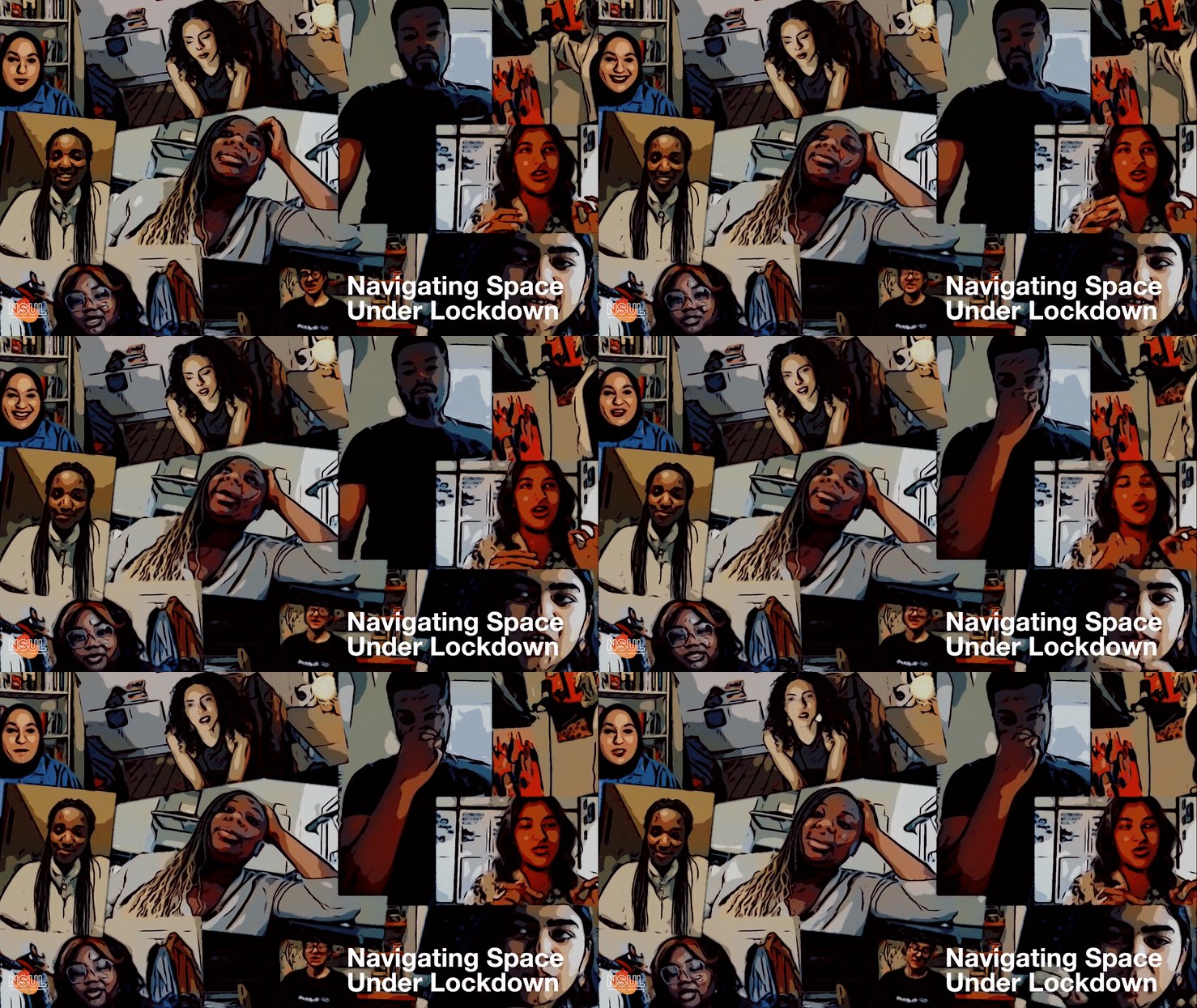
Navigating Space Under Lockdown

A research study & film documenting the perspectives and experiences of young, racially minoritised adults from across England.

Given the relative invisibility of young adults in national discussions and policy approaches relating to COVID-19, The Ubele Initiative has partnered with University College London’s Bartlett Development Planning Unit and Youth Unity, to bring you Navigating Space Under Lockdown (NSUL), a collaborative, mixed methods research project, documenting the perspectives and experiences of Black and racially minoritised young adults (aged 18 to 35) in England, during the COVID-19 pandemic.

Responding to a gap in current understandings, the project explored how young people’s experiences of home, work, mobility, community and well-being have been affected by the pandemic and by prolonged periods of lockdown.

With the support and guidance of 12 peer researchers, the project reached out to over 200 young adults from across England, through focus group discussions, an online survey, a podcast series and a short film, to capture some of their diverse voices and experiences.

The project is funded by The National Lottery Community Fund, the largest funder of community activity in the UK.

Please visit: https://nsul.org.uk
1

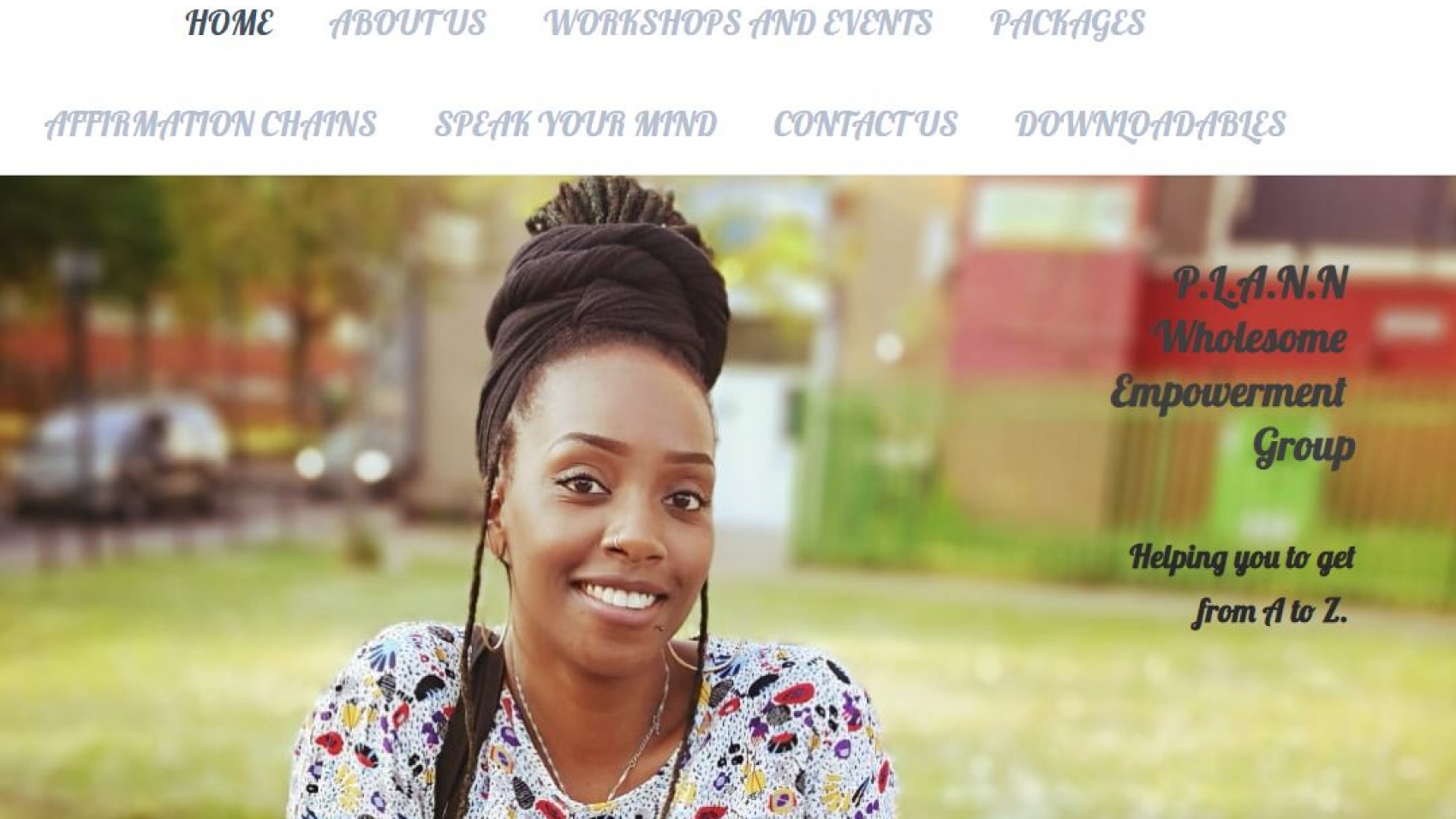
P.L.A.N.N Wholesome ​Empowerment ​Group

Youth Unity is happy to announce P.LA.N.N are coming back again this year to host an area with her visions boards and workshops. More information on the workshops will be added in due course, but in the mean time check this lady out!!

http://www.plannweg.org.uk/

Supporting YOUR journey towards a better version of yourself…..

​​Through building on 
Self Confidence,
Self Esteem,
Self Worth and
​Self Image

We do this through making your connections to build on SELF LOVE 
What does SELF LOVE mean to you? 

By definition….Self-love is the holistic regard for your health, wellness and happiness..

The journey to self love is not linear, it has it’s PEAKS and TROUGHS, it’s a journey that has a bending road and we can note these experiences in such stages: self hate – self dislike – self awareness – self neutrality – self acceptance – self like – self love.

To us, self love is grown through the ability to love your OVERALL SELF AND BEING. So how do we get there? This begins with the way you view and value yourself, your life and your position in the world.

According to Professor Steve Peters, author of The Chimp Paradox: Mind Management for Confidence, Success and Happiness, it is explained that the being is made up of FOUR different but INTERCONNECTED entities; self WORTH, self ESTEEM, self CONFIDENCE and self IMAGE.

​We will help you to EXPLORE the benefits and practicalities of how to develop in these areas of YOUR LIFE raising your self-love awareness. 

89872451_655307125305880_613063825104568320_n

ANTIKNIFE CRIME RAP TUNE MADE BY : MC J.O.K & PROJECT LANDO performing at Youth Unity

ANTIKNIFE CRIME RAP TUNE MADE BY : MC J.O.K & PROJECT LANDO HUGE THANKS TO : JOE MURPHY FOR THE VIDEO CHARLIE SANDERSON FOR RECORDING VOCALS BELLYMAN FOR INSPIRATION #DROPTHEKNIFEVALUELIFE#CARRYABASKETBALLNOTABLADE SHARE TO AS MANY PEOPLE AS POSSIBLE, ESPECIALLY YOUNG PEOPLE LETS GET THIS MESSAGE OUT THERE, KNIFE CRIME IS NO JOKE AND NEEDS ADDRESSING. THANKS, JAY KITCHEN (MC J.O.K)

sandro-schuh-HgwY_YQ1m0w-unsplash

Switch Sports

Another great addition to Youth Unity is a new concept combing FOOTBALL, BASKETBALL, VOLLEYBALL, NETBALL & HANDBALL in one game … phew yep, it makes you feel tired thinking about it, but Youth Unity was blown away when we first saw this played out and knew we had to have it on board the festival.

Fresh, exciting and innovative fits right in with what our YOUTH need. Switch Sports will be hosting a serious of games and fun activities on the festival with view to bringing the concept on board in our local area!

Are you SWITCHED!!

https://www.switchsports.co.uk/

FLYER WITH volunteers needed

VOLUNTEERS NEEDED

Please get in touch with us if you would be able to help us leading up the festival and or on the day

  • SECURITY
  • STEWARDS
  • GENERAL HELPERS
  • ADMIN
  • SOCIAL MEDIA
  • FLYER DISTRIBUTION

We will feed and water you on the day <3 and guarantee you will have lots of fun, plus we can offer a certificate to show you took part which could help with work experience, job references.

There is lots of exciting projects around our festival, as we are here for the long term and we are working to offer training and employment long term.

CONTACT: 07447 446992 ask for Shirley

bow bells pub

Bow Bells – Fund Raising

Youth Unity would like to give a HUGE HUGE thank you to THE BOW BELLS pub, staff and patreons for their amazing support <3 we are heavily relying on the generosity of businesses and the public to make this project last long after the event. We all do this project with nogovernement funding and as volunteers, so please if you want to support and get a stake in the project please reach out.

Knife Crime is continuing to rise and we are working to help young people use sports and music as a better alternative, plus lets not forget there are plenty that are great and we need a day to shine the light on all the amazing young people that of course a chance for families to get together in harmony!!

its greatly appreciated and would’nt expect anything less from a pub in the good old Eastend!! #thanks #donation

Not forgetting our amazing ambassador Léandra Maleix who has supported us from the very start! 

89062817_10158378832889203_2139790386615287808_o

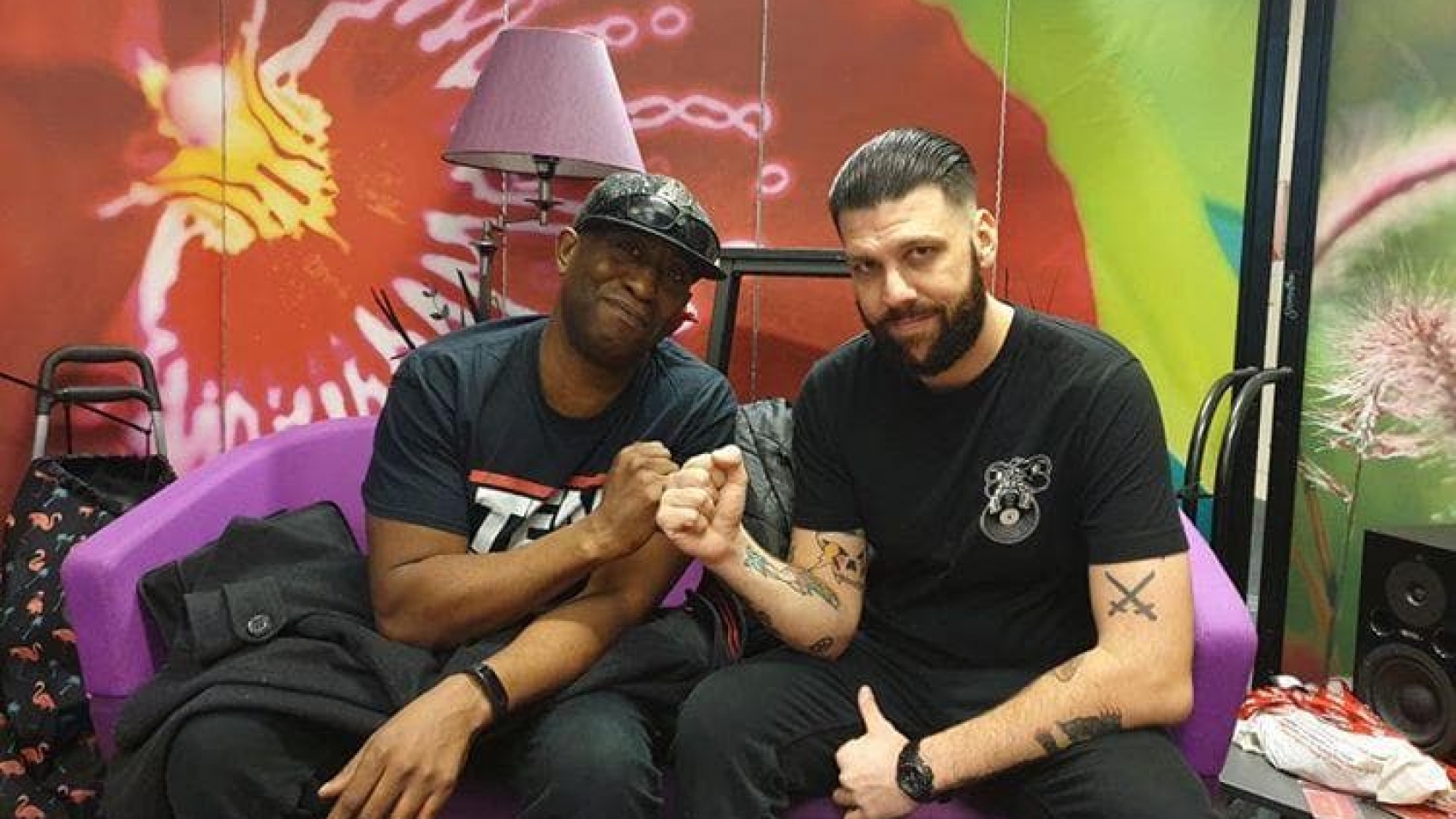
MC CKP

Our very own MC CKP will be hosting the live music stage, where he will be bigging up young emerging artists, playing the beats that the young people want to hear … yes we will have grime but it will be conscious music!

The Legendary Mc CKP has won many prestigious awards for his contribution to the Garage scene. His achievements have helped him become a major player across the globe on the underground scene with his unique, versatile style and voice.

His energy, gaining crowd participation and whipping them into a frenzy is second to none.

You have to call Mc CKP the Originator, why? Whose catchphrase’s are these? “OLIE OLIE OLIE”. (That’s right, the first MC to bring that to the club scene). “Give me a sign, if you want a rewind”, (the first MC to summon DJ’s to rewind tunes back in the day when DJ’s didn’t rewind tunes). “When I say!!!!!!!! You say!!!!!!” to name a few. He is all about setting styles and trends amongst his peers.
Few people can lay claim to being the definitive voice of their profession. Mc CKP is definitely one of those people. And most important a genuinely nice guy.

ARE YOU AN EMERGING ARTIST?

MC

DJ

RAPPER

BAND

MUSICIAN

PRODUCER

get in touch for a chance to perform on stage with this iconic legend MC CKP

Alternatively you can send your mix to shirley@youthunity.org and she will work to get back to you for a chance to perform.

No promises, but we will have well known music producers attending on the day, so you never know we may discover the next talent!