Celebrating Youth-Led Innovation: Building Mentoring Frameworks with Clear Pathways and Purpose
At Youth Unity, we strongly believe in creating opportunities for young people not only to receive support, but to help shape how that support is delivered. One of the things we are most proud of this year is the incredible initiative shown by one of our young mentors, who, at just 23 years old, has designed a full set of structured mentoring frameworks to support young people across different stages of their lives.
These frameworks were developed to bring consistency, clarity, and clear end goals to mentoring relationships, helping young people understand what they are working towards and how each session supports their personal development. They also give schools, parents, and partners confidence that mentoring is not just supportive, but purposeful, measurable, and safely delivered.
What Do the Frameworks Cover?
The frameworks span multiple areas of need and age groups, including:
Year 6–7 Transition Mentoring – supporting confidence, emotional wellbeing, coping strategies, and school readiness during the move from primary to secondary school, with structured 6-, 8- and 12-week pathways and clear outcomes around belonging, peer relationships, and engagement.
Yr 6-7 transition
Emotional Regulation and Conflict Resolution Mentoring – a trauma-informed, strengths-based approach for young people aged 11–18 who struggle with managing emotions, triggers, and relationships, with defined eligibility criteria and clear safeguarding boundaries.
Emotional and Regulation Mentor…
Mental Health and Emotional Wellbeing (Early Help) Mentoring – focused on low to moderate emotional needs, helping young people build coping strategies, confidence, and healthy help-seeking behaviours, while clearly identifying when specialist or clinical services are required.
Youth Unity Mentoring framework…
Life Skills and Independence Mentoring (16–25) – supporting young people to build practical skills such as time management, budgeting, self-care, and problem-solving to prepare for independent living and adulthood.
Life skills and Independence
Employment and Training Mentoring – helping young people aged 16–24 develop CVs, interview skills, career awareness, and realistic progression plans into education, training, or employment.
Each framework includes:
Clear eligibility and exclusion criteria
Defined session structures
Adaptable 6-, 8- and 12-week pathways
Outcomes that can be measured and reviewed
Built-in reflection and planned endings, supporting healthy transitions rather than dependency
Blending Digital Tools with Relationship-Based Practice
Alongside Youth Unity’s accredited training programmes and safeguarding frameworks, these mentoring pathways also integrate the Ambition Project (https://mynd-app.com/), which we have permission to use as part of our delivery.
The Ambition Module supports young people to:
Track goals and progress
Reflect between sessions
Build self-awareness and motivation
Stay engaged with their development outside of face-to-face mentoring
This blended approach allows us to combine trusted relationships with practical digital tools, helping young people build skills that transfer into everyday life, education, and work.
Young People Supporting Young People, With Professional Backing
What makes this even more powerful is that these frameworks were created by someone who understands, first-hand, the realities young people face today. This is a clear example of youth-informed practice, where lived experience, professional standards, and safeguarding expectations come together.
At the same time, these frameworks sit within Youth Unity’s wider organisational systems:
Case management and safeguarding oversight
Professional supervision
Accredited training and continuous development
This ensures that while young people are helping shape support, it is always delivered safely, ethically, and in line with statutory expectations.
Growing Talent From Within
We are incredibly proud to support the growth and development of our own staff and mentors. Creating space for initiative like this reflects our wider commitment to:
Building future youth work leaders
Supporting professional development
Valuing innovation at every level of the organisation
This work shows what can happen when young professionals are trusted, supported, and given the opportunity to lead not just in delivery, but in designing the systems that support young people to thrive.
An Evening of Reflection and Partnership at Westminster Abbey
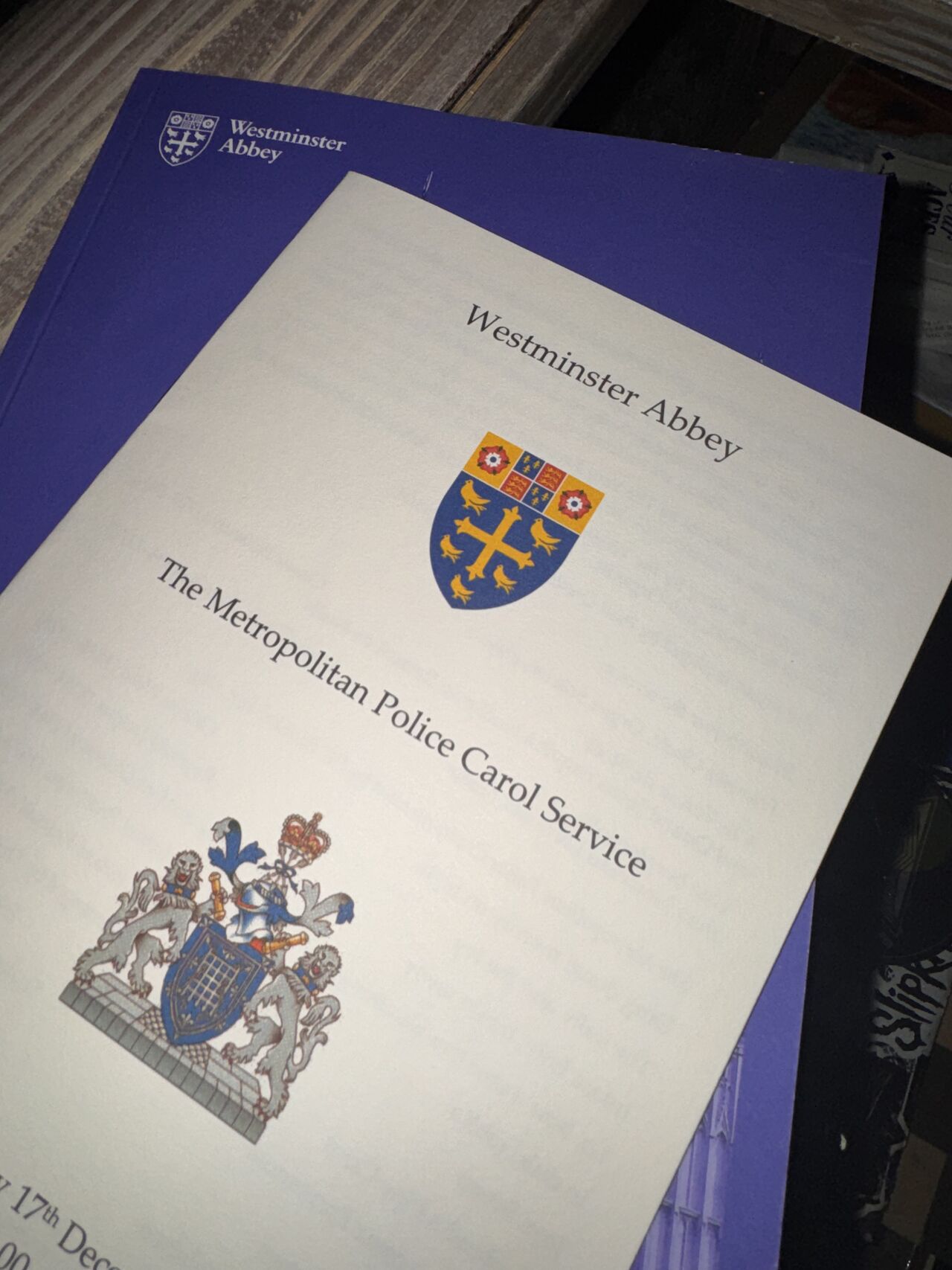
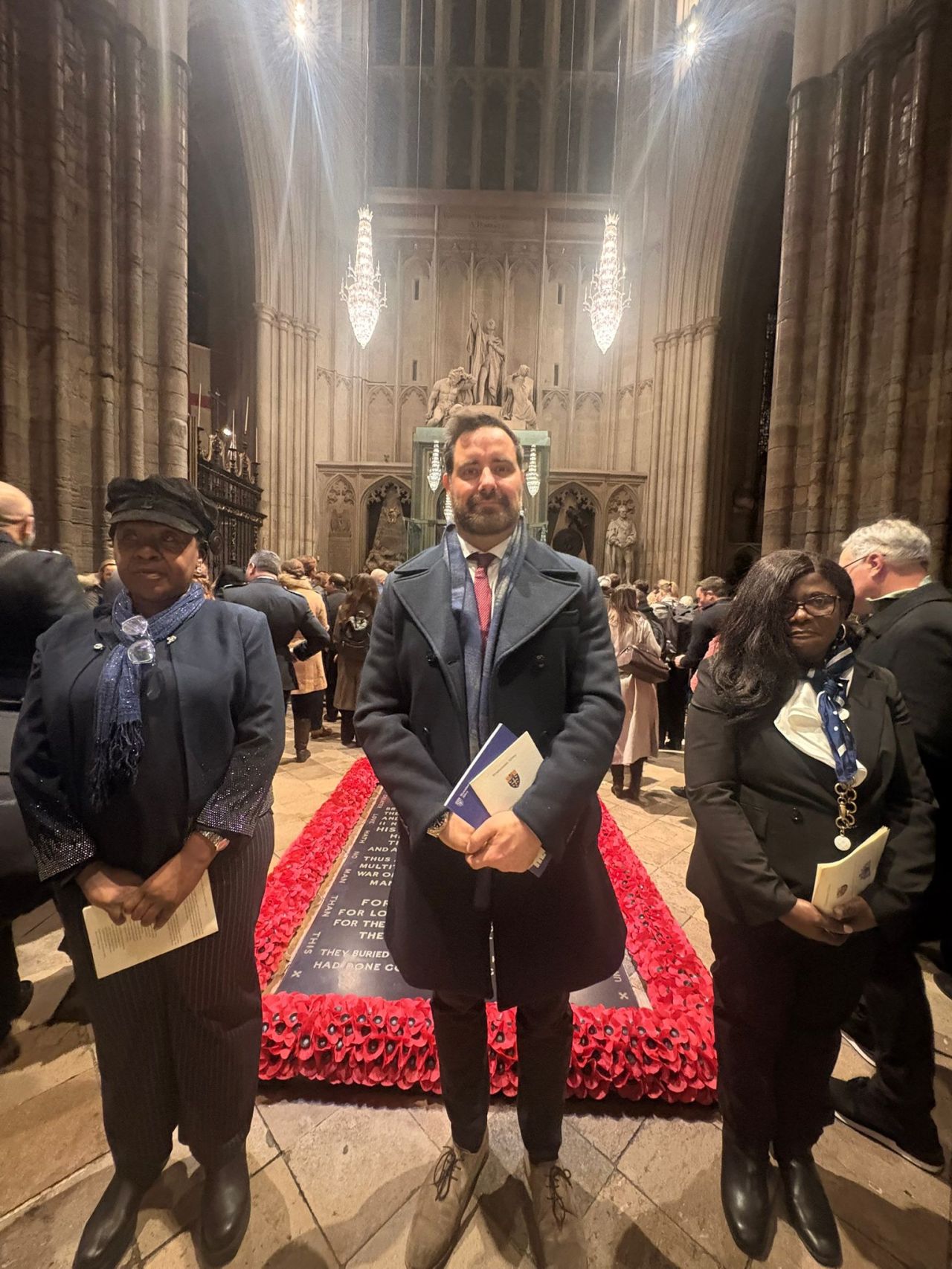
Last night, members of the Youth Unity CIC team were honoured to attend the Metropolitan Police Annual Christmas Carol Service at Westminster Abbey, following a kind invitation from our colleagues in the Metropolitan Police.
Set within the incredible surroundings of the Abbey, the evening created a warm and reflective atmosphere, bringing together partners, frontline professionals and community organisations to mark the end of another demanding year of public service. The carols, readings and shared moments of quiet reflection offered a chance to pause, reconnect and recognise the collective effort that goes into keeping our communities safe and supported.
At Youth Unity, partnership working sits at the heart of everything we do. Our collaboration with police, councils, schools and community services allows us to reach young people earlier, provide positive opportunities, and build trusted relationships that support long-term change. Events like this are an important reminder that behind every programme and every intervention are people who care deeply about young people and their futures.
We would like to thank the Metropolitan Police for the invitation and for hosting such a thoughtful and welcoming event. It was a genuinely lovely way to step into the festive season and reflect on the value of working together.
As the year comes to a close, we want to wish all of our partners, young people, families and supporters a peaceful and joyful holiday period, and we look forward to continuing our work together in the new year.
Investing in Better Safeguarding and Smarter Systems
At Youth Unity, young people are at the heart of everything we do. Safeguarding, trust and accountability are not just responsibilities we talk about they are built into our daily practice.
That’s why we’ve recently invested in a new case management system through Substance. This system allows us to securely log our sessions, record the support we provide, and ensure that important information is kept safe, accurate and consistent. Most importantly, it strengthens our safeguarding processes and helps us respond more effectively when young people need us.
We also know that our mentors’ time is best spent building relationships, supporting young people and being present, not completing endless paperwork. This system has been chosen to make recording information simpler, faster and more meaningful, allowing our team to focus on what matters most.
In addition, the system enables us to produce more in-depth case studies and structured reports. This is essential in helping us demonstrate impact clearly, meet the requirements of our funders, and ensure transparency and accountability across our work.
While there is a learning curve, this investment is about long-term impact. It will help us track progress more clearly, identify concerns earlier, and evidence outcomes more effectively.
This change reflects our ongoing commitment to improving our services and ensuring that every young person we work with is supported safely, responsibly and with care.
Youth Unity CIC at the King’s Garden Party — A Day We’ll Never Forget
This year, Youth Unity CIC had the incredible honour of being invited to attend the King’s Garden Party at Buckingham Palace, in recognition of the work we do with young people and communities across our local areas.
It was one of those moments where you stop, look around, and think… how did we get here? From community centres, school halls, street-based outreach and youth clubs, to standing in the gardens of the Palace — it was truly a day we will never forget.
We were lucky enough to be given two tickets, which, if we’re honest, felt both amazing and slightly cruel — because if it were up to us, we would have brought the whole Youth Unity team along. But let’s be realistic… the King may have been slightly overwhelmed if our entire staff team, mentors, coaches and youth workers had all turned up together!
One of the highlights of the day was seeing His Majesty the King up close and in person, something neither of us will ever quite get over. It was a powerful reminder that the work happening every day in local communities — often quietly, behind the scenes — really does matter and is being noticed.
For us, this invitation wasn’t just about a special day out. It was about recognition of:
the dedication of our frontline staff and volunteers
the trust placed in us by young people and families
the strength of our partnerships with councils, police, schools and community organisations
and the belief that early support, positive opportunities and strong relationships can change lives
We are incredibly grateful to everyone who has supported Youth Unity along the way — from funders and commissioners, to local partners, parents, and most importantly the young people who allow us to walk alongside them in their journeys.
So yes… we had an amazing day, we enjoyed the sunshine, we soaked up the atmosphere, and we came home feeling proud, motivated, and even more committed to continuing the work we do.
And next time, Your Majesty… we’ll try not to bring the whole team. Probably.
Whilst youth services have been cut by 77% over more than a decade, violent offences among young people remain at unacceptably high levels warn the National Youth Agency (NYA), in its latest report, The social cost of youth work cuts: Preventing youth offending through youth work, published at the start of Youth Work Week, from 6 -12 November. Despite these startling figures, it costs four times more for a young person to enter the criminal justice system (£200,000 by the age of 16), than it does for them to avoid it through youth work provision (less than £50,000). (1)
The social cost of youth work report provides an analysis of 74 sources of academic literature and research evidence relating to the impact of youth work on young people in contact with the youth justice system. The report shows a clear association between reduced funding for youth provision and an increase in crime rates for some young people.
Despite this, open access youth service expenditure has been disproportionately affected by austerity cuts. Furthermore, young people themselves are crying out for safe spaces with 24% of young respondents to a recent survey by the youth charity OnSide, reporting that they do not have a safe space to go to where they feel they belong. (2)
Whilst convictions have fallen by a third, for every 1,000 children in the population, 4.6 are still in the youth justice system, and their needs are becoming increasingly complex in the wake of the pandemic, as mental health rates soar and amid a cost-of-living crisis. (3)
Meanwhile, youth work saves £500 million on public spending through crime reduction alone and social return on investment research reveals that £1 investment in youth work is estimated to return £3.20 – £6.40 of value. (4)
The report cites the 2020 All-Party Parliamentary Group for Knife Crime focused on the impact of youth centre closures across the country, which revealed that each reduction in the number of youth centres corresponded to an increase in knife crime. This trend is echoed in a PhD study, completed earlier this year, which reviewed London youth centre provision published in 2023 by Carmen Villa-Llera, in the Economics Observatory at the University of Warwick. The research found that crime participation amongst 10-15 year olds increased by 10% in those London boroughs affected most by youth centre closures between 2010-2019. Furthermore, young people in these areas are 12% more likely to be suspended from school since the reduction in youth provision. (5)
Examples of where youth work is having a positive impact on youth crime rates, include the Linx Youth Project, Middlesbrough, which saw a significant reduction in crime amongst young people as a result of youth workers delivering support in the community (detached youth work), with the number of first-time entrants to youth justice decreasing by 79% over a four year period from 2016 to 2020. Furthermore, the project evaluation found that the social impact value for the service is £5.50 for every £1 invested. (6)
Meanwhile a Redthread youth work team working in the Emergency Department at St Mary’s hospital has brought about a 59% reduction in young people’s involvement with violence, and 37% reduction in involvement with crime, as a direct result of their engagement with a youth worker in the hospital. (7)
The launch of The social cost of youth work cuts report from National Youth Agency coincides with their annual Youth Work Week national campaign, which this year is focussing on the added value that youth workers bring to the outcomes of young people through providing their particular support in a range of contexts and professional settings.
Leigh Middleton, Chief Executive, National Youth Agency, said: “A lack of youth work isn’t just failing our young people, it’s also putting a strain on the public purse. Where youth workers are working in partnership with other allied professionals such as prison officer, youth offending teams, healthcare workers and teachers, we know that they are able to use their particular set of skills to capitalise on that ‘reachable moment’ and work with, and for, the young person to help them recognise that they can make positive choices about their future lives.
“The NYA is working to build back the skills and capacity of the sector working closely with our academic and training partners, and through schemes such as the DCMS funded bursary and leveraging the government’s apprenticeship levy to enhance opportunities to attract people to youth work and to retain and upskill those already working in the sector.”
We are thrilled to announce that Youth Unity has won the prestigious award for Best Organisation at the BEFFTA Global Awards 2024! The event, held on 26th October as part of the UK’s Black History Month celebrations, was an incredible experience for our team. It was an honour to be recognised among such inspiring global leaders, and the evening was made even more special with our team attending in tuxedos, adding to the glamour of this star-studded event.
The BEFFTA (Black Entertainment Film Fashion Television and Arts) Awards, founded by Her Excellency Professor Pauline Long, celebrates outstanding achievements in the Black and ethnic minority communities. Being part of this prestigious event is a momentous occasion for Youth Unity, and we are immensely proud to have received this recognition for our work.
We would like to extend our gratitude to BEFFTA and everyone involved in making the evening unforgettable. It was a night filled with joy, pride, and a strong sense of community, and we look forward to continuing our mission of making a positive impact on the lives of young people.
Stay tuned for more updates as we continue to strive for excellence in all that we do!
We want to take a moment to express our deepest gratitude to our incredible team at Youth Unity. Their dedication, passion, and unwavering commitment to supporting young people are the driving force behind our success. Winning the award for Best Organisation is a testament to their hard work and the positive impact they have on the community every day. We are so proud to have such an amazing team, and this recognition would not have been possible without each and every one of them.
Thank you for all that you do!
We want to take a moment to express our deepest gratitude to our incredible team at Youth Unity. Their dedication, passion, and unwavering commitment to supporting young people are the driving force behind our success. Winning the award for Best Organisation is a testament to their hard work and the positive impact they have on the community every day. We are so proud to have such an amazing team, and this recognition would not have been possible without each and every one of them.
Thank you for all that you do!
Finally, we would like to express our heartfelt gratitude to Kristy Prince for putting us forward for this nomination. Her unwavering support from the very start of Youth Unity has always been deeply appreciated, and we are truly thankful for her continued belief in our work.
Teachers in the north west of England say they are having to go beyond their remit to give support to disadvantaged pupils, a survey has found.
About 520,000 (43%) pupils are estimated to be experiencing a range of external challenges that are impacting their education, according to the Action for Children charity.
Teachers said they were becoming the first port of call for parents who did not know where to get help, providing emotional support, and even essentials like food and clothing.
The charity has now called on the government to promote the use of family liaison officers in schools and make it a legal requirement for councils to provide early help services.
A spokeswoman for the Department for Education said they were providing “additional support for disadvantaged pupils”.
The Action for Children survey, which gained responses from about 800 teachers in north-west England, reported the most common barriers to education were:
living in an unstable family environment (68%)
behavioural or emotional issues (65%)
mental health challenges (55%)
poor attendance (46%)
poverty (44%)
‘You worry about them’
Many teachers said they were becoming the first port of call for parents who did not know where to get help.
They said they were increasingly having to go beyond their remit to provide emotional or family support or essentials like food and clothing.
Many teachers said it was hindering their ability to teach and they were experiencing an emotional toll on top of heavy workloads.
One secondary school teacher said: “When you’re not with them you’re worrying about them thinking, even though I feel like I’m at capacity, if I did this extra thing that could really make a difference.”
Just 3% of the region’s teachers polled believed that pupils facing challenges will reach their expected grades by the end of this academic year.
The charity said there was also a north-south divide, with teachers in the north and Midlands more likely than teachers in the south and east to report that at least half of their pupils were experiencing barriers.
Rosie, from Wirral, is someone who has received support from the charity.
It started when she had felt stressed with her school workload which ultimately impacted her relationship with her parents.
The 14-year-old told BBC Merseyside: “I felt that it changed my relationship with my parents but it also meant I had less free time because I was always working to get the homework done so that I wouldn’t get into trouble.”
The charity gave the family somewhere outside of the school environment to turn, when they were given help from external trained workers.
Rosie’s mother, Isabel, said: “We try to be a supportive family and not every family has that.
“But also we are a family where parents work and in order to maintain that life… sometimes you need someone somewhere else to go to.”
Government funding
Helen McKee, Action for Children’s operational director for the North West, said: “In this general election year, it’s vital that all political parties focus on children – including what they need both inside and outside school.”
The charity is calling on government to support all councils to integrate their early help, early intervention and family services so there is “one front door”.
A government spokeswoman said: “We are taking a range of steps to improve attainment and outcomes for all pupils, with additional support for disadvantaged pupils.”
She said they had invested £1bn in tutoring since the pandemic and are increasing pupil premium funding to £2.9 billion in 2024-25.
“This comes on top of our ongoing £10 million Behaviour Hubs programme and £9.5 million for up to 7,800 schools and colleges to train a senior mental health lead.
“Thanks to our fantastic teachers and school leaders, and our package of wide-ranging reforms, there were 440,000 fewer children persistently absent or not attending last year alone.”
Sports Podge, held on the 5th of May at the Oval, was an amazing event organised by Phil Jones and his team, an event that brought people together through the power of sports. We were blown away by the concept and the execution of this event.
From the moment we arrived, we were impressed by the level of organisation. The wonderful food, top-notch entertainments, and great people we networked with throughout the day made the event truly unforgettable. The location at The Oval was also an ideal setting, providing a perfect backdrop to the exciting activities.
The atmosphere was lively and welcoming, making it easy for everyone to connect and enjoy themselves. We were thrilled to meet so many like-minded individuals who shared the same passion for sports and the desire to make a positive impact on the community.
In conclusion, Sports Podge was an amazing event that exceeded all our expectations. I enjoyed every moment of it, from the food to the entertainment, the people, and the activities. I can’t wait to attend the next one and see what Phil Jones has in store for us. It was truly an unforgettable experience!
Machetes and zombie knives could be banned in England and Wales, with people selling them facing up to two years in jail, under government plans to close a legal loophole.
After complaints from police chiefs and MPs that some large, bladed weapons are excluded from current laws, the Home Office will consult the public over plans to ban their ownership and sale.
Certain blades that are “designed to look menacing” and “with the intention to threaten” are not currently prohibited but would be outlawed under proposed measures, the Home Office said.
Knife crime has increased by 9% in the past year and 34% in the past decade, to 45,000 offences.
This month a judge urged jurors to write to their MPs about the “shocking” availability of dangerous weapons online after a man was found guilty of killing an 18-year-old with a 22-inch zombie knife.
Under laws introduced in 2016, police can only confiscate and prosecute possession of zombie knives in private homes if they meet three criteria. The knives must have a cutting edge, a serrated edge and “images or words that suggest it is to be used for the purpose of violence”.
Inspired by horror films, the curved blades with serrated edges are often sold as collector’s items, but police say they are increasingly being carried by criminals.
Machetes have no such markings, while some retailers have been selling zombie knives without any writing or images on them or even packaging that would allow police to seize them.
While machetes and other similar knives can have legitimate uses in gardening and the agricultural sector, the Home Office said criminals were buying, selling and using larger bladed articles as weapons to intimidate and cause others serious harm.
The seven-week public consultation will define which machetes and large knives will be banned, inviting views to ensure proposals are targeted and balanced in order to keep our streets safe, the Home Office said.
The home secretary, Suella Braverman, said: “The thugs wielding these deadly knives aim to terrorise their victims and the public, and too often even carry out horrific or fatal attacks. They are emboldened by the cowardly idea that carrying these blades inflates their own status and respect.”
The Covid-19 pandemic has shone a spotlight on the ‘digital divide’ which widens inequalities between disadvantaged children and young people and their peers. Charlotte Goddard investigates.
It is easy to think of children and young people as “digital natives”, navigating the internet with ease. But this is a misconception, explains Theo Blackwell, chief digital officer for London. “We know children often are very adept at some parts of internet access but less so in others,” he says. The pandemic has made it impossible to ignore the fact a significant proportion of children and young people face barriers to digital inclusion, affecting their education, wellbeing and ability to make their voices heard.
“It became very clear how much of an impact digital poverty was having on a whole other host of social issues,” says Cathryn Moses-Stone, head of policy and public affairs at Catch22, which has partnered with Nominet and Livity on research into the barriers to digital skills and access for some of the most disadvantaged groups in the UK. “We had child sexual exploitation team key workers who couldn’t get in touch with young people, we had care leavers who had to choose between paying for the internet or paying for heating.”
As of December 2021, the UK government has reacted to these issues by providing 1,679,785 devices and 101,652 routers to support children’s lockdown learning. However, there have been concerns about delays in delivery, lack of skills and support for educators, safety and security issues, and a lack of at-home support and space. “Devices weren’t getting through to the right people, and just getting a device isn’t enough – what if they can’t afford to buy data?” says Moses-Stone.
While a lack of appropriate platforms is one aspect of digital exclusion, the digital divide is not just about one-off deliveries of hardware. It also comprises connectivity, sustainable access – devices and connections that are upgraded as technology progresses – and the appropriate digital skills to effectively participate online. In their report Closing the Digital Divide for Good, charities Carnegie UK and UK Committee for Unicef (Unicef UK) also argue a safe online environment is essential for digital inclusion. “Just having a laptop or even having a phone does not make you digitally included,” says Anja Nielsen, senior policy adviser, education and youth at Unicef UK.
Digital exclusion is holding back children in some of the most marginalised situations, including care leavers and looked-after children, those from disadvantaged families and living in rural areas, children with special educational needs and disabilities, Gypsy and Traveller children, and young offenders. Nominet’s Digital Youth Index, which is tracking the digital divide, found children and young people more likely to be left behind in the digital world are those without access to a laptop or desktop computer, those whose household does not primarily speak English or Welsh, those with special educational needs, receiving free school meals and being looked after by a single parent or caregiver.
“Digital exclusion maps fairly well on to other issues of exclusion – groups of young people that are more at risk of certain vulnerabilities are likely to also be at risk of digital exclusion,” says Anna Grant, senior policy and development co-ordinator at Carnegie UK, which has been working on issues around the digital divide for around a decade.
“More needs to be done to better skill all children in tech, let alone young people who are at a serious social disadvantage anyway,” says Moses-Stone. Catch 22’s Digital Edge scheme supports people from under-served communities to access a digital apprenticeship with a local employer. Young people from lower-socio economic groups are six times as likely not to have access to the internet, and 10 times as likely to not have access to a laptop, desktop or tablet compared with young people from the highest socio-economic groups, according to Ofcom.
A debate on digital inclusion took place in Westminster Hall last November and a raft of local and national initiatives have sprung up to tackle the issue. Barnardo’s, for example, is working with Vodafone to provide training for young people in digital skills and encouraging donations of secondhand digital devices. However, there are concerns the return to the classroom risks a de-prioritisation of efforts to close the digital divide.
Even if day-to-day education remains classroom-based, extracurricular and non-academic work is set to become increasingly digitally accessed, while social interactions, access to information and elements of services such as mental health support are moving online. “We were really concerned that there was going to be a cliff edge – data packages that ran out, support systems that were time bound – that caused us real concern about what was going to happen next,” says Grant.
So what can be done to tackle the issue? First, says Moses-Stone, there needs to be a more coherent understanding of what digital poverty looks like and which groups it most affects, and more of a focus on tackling the gap in digital skills. Carnegie UK and Unicef UK are calling for a long-term government strategy to tackle digital exclusion, developed in partnership with children and young people and including a monitoring and evaluation framework.
Children’s professionals also have a role to play in pinpointing who needs support, but they also need training up in digital skills themselves. “That’s where frontline services really come to the fore because they’re the ones that understand communities,” says Grant. Sharing of best practice is also important. “A lot of the solutions are there and being implemented at a local level or hyper local level – it’s just about using all of that to create a sustained response,” says Nielsen.
Unicef UK and Carnegie UK see digital inclusion as inextricably linked to children’s rights, as set out in the UN Convention on the Rights of the Child, including access to education, the best health care possible, access to information, and the right to have their voices heard. “Digital inclusion is not really an end goal in and of itself, it is what it enables people to do,” says Grant.
THE DIGITAL DIVIDE IN NUMBERS
2% of school-age children could only access the internet via a smartphone during the first lockdown
80% of children had constant home access to an appropriate device to enable them to connect to the internet for online learning, 13 per cent had access some of the time, two per cent rarely had access and two per cent never had access
2.2 million young people (15%) have a smartphone but no access to a laptop or desktop computer
30% of children living in households with a combined income below £20,000 do not have access to a laptop or desktop computer
32% of young people do not have access to home broadband
We need local and national government to work with charities and business to tackle digital divide
By Cathryn Moses-Stone, Head of policy and public affairs, Catch22
The question we should all be asking is: What happens if we don’t address the digital divide for children and young people?
Digital exclusion is now a well-documented issue. There are a multitude of well-intended and well-executed schemes to try to make sure children and young people are digitally connected and this support comes from across society, big business and government.
But it is increasingly apparent this isn’t enough. Schemes can be patchy in their reach or uptake, often excluding the groups of young people that need them the most through flaws in design or delivery. There are some brilliant projects, such as the BT Social Tariff, launched last year for households receiving universal credit and other benefits. This will make a big difference but what plugs the gap for those who don’t claim universal credit or jobseeker benefits?
There is even a conflicting sense of what the scale of the problem really is. Just because a home has broadband, that doesn’t mean it is good enough for a family of five to work, learn and live with, or they have the devices they need to do that. Youth Employment UK’s annual Youth Voice Census shows that in lockdown two in three young people studying at home shared devices with at least one other person.
All of this is before we even address the skills you need to be able use the digital world. The Nominet Digital Youth Index shows that while 90 per cent of young people have a smartphone, six million do not have home broadband or a laptop or desktop computer needed to access education or skills development, or to search or apply for jobs.
Catch22 is working with Nominet on research to try to better understand which groups of young people are being hardest hit by the digital divide and barriers to gaining digital skills for employment – as well as what works in tackling these issues and, crucially, who is accountable.
My son is two and a half. Nearly two years of home working means he knows “mummy working” involves me sitting at my laptop, typing away. He can spell his name out on my laptop keyboard. He can also unlock my phone, go straight to the BBC iPlayer app and start an episode of Postman Pat.
He is already being set up for a digital future. A future that requires us to access GP test results online, register vaccine status for travel and, fundamentally, to be able to write a CV, apply for and succeed in a job.
But what happens to the children or families that don’t have this luxury? The luxury of access, the right networks of people, know-how or education needed to develop a digital skillset and an understanding of how to stay safe online and harness all it has to offer.
We know many children and young people are tech savvy, but that doesn’t mean those skills are transferrable to the workplace or used for positive means. Growing up with digital access and literacy has to be as essential as learning how to write with a pen and paper.
Social inequality is widening because of the digital divide. The Social Mobility Commission’s 2021 State of the Nation report recognises the role of digital access and skills in supporting future social mobility and reduced inequality. That gulf will only continue to grow if we don’t build on the great work that has begun, to develop a more cohesive and targeted plan of action.
We need a centralised government strategy – one that is considered to be as fundamental as tackling poverty or joblessness. They do, after all, go hand in hand. We need a commitment from businesses to help continue to deliver devices and data to those that need it the most but cannot currently afford or access it. We need them to work with government and civil society to help develop the digital skills of our young people.
The concept of corporate parenting should be as relevant for businesses employing young people in their communities as it is for a local authority. The National Databank, which provides free Sim cards and mobile data to those affected by data poverty, was created by Virgin Media O2 in collaboration with other digital inclusion experts including Hubbub and Nominet. It is being run by the Good Things Foundation through its network of 5,000 community groups and is a brilliant example of commitment and collaboration.
We need local authorities and the third sector to be the bridge for government and business, using their understanding of the communities they support and trusted relationships to connect those that need help the most with initiatives that can help them. And we need digital skills development to be as core to the school curriculum as learning the phonetic alphabet.
My son will be okay. Other people’s children won’t. And the consequences for them, and for our society, could be devastating.
CASE STUDY YOUNG PEOPLE CAMPAIGN TO KEEP CARE LEAVERS CONNECTED
The National House Project supports young people leaving care to live independently. Its Care Leavers National Movement is made up of care leavers from local House Projects who meet regularly to come up with new ideas to improve things for young people.
In February 2020, the group discussed care leaver support packages, with many mentioning difficulties in affording WiFi. “By the time we next met, we had gone into lockdown and the world relied on WiFi, so our discussion came into stark focus, as the young people couldn’t keep in touch with a lot of important services,” says young people’s participation and development worker Rosie Blackett.
The National House Project was able to equip the 250 or so young people taking part in its projects with data connectivity and smart phones for the first three months of lockdown. “Then the government started offering devices but there were difficulties – there was only so much data on the routers allocated, the same laptops were offered to five- and 18-year-olds with no differentiation, many of the laptops had settings which meant you couldn’t use Google Chrome, for example,” explains Blackett.
The group reached out to charities like Catch22 and the Care Leaver Covenant and signed up around 30 organisations to the Keeping Care Leavers Connected Campaign, which lobbied nationally and locally for digital support for care leavers.
In March 2021, Islington Council became the first local authority in the country to commit to giving all care leavers 12 months of free WiFi. “It was the right thing to do,” says Brenda Amisi-Hutchinson, service manager for independent futures at Islington’s Care Experienced Young Person Service. “Thinking about our corporate parenting duties, it is important to us to offer what a reasonable parent would offer.” Other councils are also showing an interest.
While there is a lot going on to tackle the digital divide, care leavers can fall through the gaps says Blackett. “When we talk about the digital divide, we’re often referring to young people in education but many care leavers are not in education, employment or training.”
For care leavers, who may have lacked stable, long-term relationships, the internet is vital to keep in touch with friends and family as well as accessing services. “Whether it’s paying utility bills, doctors’ appointments, accessing counselling support or social workers and personal advisors keeping in touch through WhatsApp, everything is online,” says Blackett.
Triggered by the need to connect to young people during the lockdown, the National House Project has launched an online support platform for care leavers. Funded by the DfE, it will be rolled out to all local authorities, featuring tailored content and regional resources.
CASE STUDY TASKFORCE TO TACKLE DIGITAL EXCLUSION IN THE CAPITAL
The Mayor of London, Sadiq Khan, launched a taskforce in February 2021 to tackle digital exclusion, bringing together the public sector, charities, councils and private sector. “One of the key concerns when the country was in lockdown was the fact children couldn’t learn online, young people couldn’t search for jobs online, or communicate with their loved ones – it was one of those issues that really rose to the top of the agenda,” says London’s chief digital officer Theo Blackwell. “We wanted to address this problem in a much more co-ordinated way.”
The taskforce is mapping out the need for devices and reliable connectivity across London. “We lacked data at crucial times during the crisis that would enable us to triage need quickly,” says Blackwell. “The tech sector was responding but they faced the same challenge – they were saying ‘We can give free data but who shall we give it to?’” The London Office of Technology and Innovation has created a digital divide map of London and 24 “personas”, showing different types of people affected by the digital divide, including care leavers, and disadvantaged families. Organisations can use this information to target support most effectively.
One pilot programme is looking at the upcycling of public sector digital devices, sending them to people who need them. “Each year tens of thousands of devices that are not that old fall out of use in the public sector, police and local councils,” says Blackwell. “We’re formulating a plan to set up a London-wide campaign around this and create a sustainable mechanism for laptops not to go to the skip.”
There is also work going on with telecommunication companies to create “social tariffs” for those who can’t afford connectivity, provide training in basic digital skills and an innovation programme to identify and overcome problems, led by the London Office of Technology and Innovation. “There is still a lot more work to do around school-aged children and digital exclusion,” says Blackwell. “It’s more than just an equity thing. How can you innovate as a city when you are leaving people behind?”